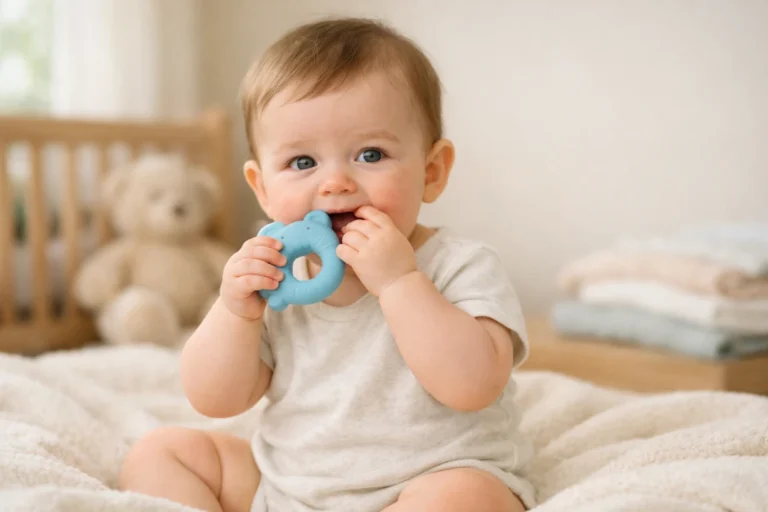
When parents ask when do babies start teething, they are often already worried about sore gums, extra crying, and sleepless nights. Teething is a big step in your baby’s growth, and it can feel confusing and stressful. By knowing NHS based signs, common timelines, and safe remedies, we can care for our babies with more calm and confidence.
What Is Teething And Why It Matters
Teething is the process when a baby’s first teeth, also called milk teeth or primary teeth, move through the gums and start to appear in the mouth. These first teeth help babies chew food, support speech, and guide the permanent teeth that will come later.
We often search for “when do babies start teething” because the first symptoms can look like many other baby problems. One baby may drool and chew everything. Another baby may have red cheeks and cry more at night. Knowing what is normal helps us decide when we can manage at home and when it is time to speak with a doctor or nurse.
When Do Babies Start Teething According To The NHS
Based on NHS guidance, most babies start teething at around 6 months of age. But there is a very wide normal range. Some babies get their first tooth at 3 months, while others do not get any teeth until after their first birthday.
Here is a simple guide to when do babies start teething and how teeth usually appear:
Typical Teething Timeline
These ages are averages. Your baby may be earlier or later and still be healthy.
- 3 to 6 months: Some early teethers may show signs like drooling and chewing. A few may get their first bottom teeth.
- 6 to 10 months: Most babies get their first teeth in this window. The two bottom front teeth (lower central incisors) usually appear first.
- 8 to 12 months: The top front teeth (upper central incisors) and then the teeth next to them often come in.
- 9 to 16 months: More side teeth appear, called lateral incisors.
- 13 to 19 months: First molars often come in, which can be quite sore for some babies.
- 16 to 23 months: Canines (the pointy teeth) usually follow.
- 23 to 33 months: Second molars tend to be the last to appear.
By around 3 years of age, most children have a full set of 20 baby teeth. When we think about when do babies start teething NHS information reminds us that being an early or late teether usually does not mean a health problem as long as the baby is growing well and seems otherwise healthy.
Common NHS Teething Signs Parents Notice
Teething can affect each baby in a different way. Some hardly seem to notice, while others seem very upset. The NHS lists several common signs that may happen when a tooth is on the way.
Typical Teething Symptoms
We may see one or several of these at the same time:
- More drooling: Many babies drool a lot when teeth are moving under the gums.
- Chewing or biting: Babies often chew their hands, toys, or anything they can reach to ease pressure on the gums.
- Sore or red gums: The area where the tooth will appear may look red, swollen, or bumpy.
- Flushed cheeks or chin rash: Cheeks can look red, and skin around the mouth may get sore from constant drool.
- More fussiness: Your baby may cry more, seem clingy, or be harder to settle.
- Changes in feeding: Some babies want to feed more, while others pull away from the breast or bottle because sucking hurts.
- Changes in sleep: Pain and pressure often feel worse at night, making it harder for babies to stay asleep.
When do babies start teething in a way we can clearly see? For many babies, the clear sign is when you can feel or see a hard little edge on the gum. Before that, the signs can be mild and easy to miss.
Teething And Fever: What The NHS Says
Many parents believe teething causes high fever, serious illness, or long-lasting diarrhea. NHS guidance is clear that teething can make a baby feel mildly unwell, but it should not cause a high fever or severe symptoms.
Teething may cause a slightly raised temperature, but usually no higher than 100.4°F (38°C). If your baby has a higher fever, or seems very unwell, the cause is likely an infection, not just teething.
We should contact a doctor, NHS 111, or local urgent care if:
- Fever is 100.4°F (38°C) or higher and does not improve.
- The baby is very sleepy, hard to wake, or very hard to comfort.
- There is trouble feeding or very few wet diapers.
- There is a rash, breathing problem, or any symptom that worries us.
When do babies start teething and also get sick at the same time? This often happens by chance because the first teeth come in around the same age as common colds and other viral illnesses. It can be easy to blame the teeth, but we should not ignore possible signs of infection.
Safe NHS Based Teething Remedies That Really Help
Many parents feel helpless when their baby seems to be in pain. The good news is that there are several simple, safe options that can bring relief. NHS advice focuses on non drug methods first, then medicine only if needed.
Gum Massage And Comfort Measures
Firm, gentle pressure on sore gums can ease pain for many babies. Wash your hands well, then rub the gums in small circles. Your baby may bite down on your finger, which is a normal response to pressure relief.
Extra cuddles, rocking, and calm contact also help. Sometimes a baby in pain just wants to be held more often. When we worry about when do babies start teething, we often forget that simple comfort from a parent or caregiver is one of the strongest tools we have.
Teething Rings And Cool Chews
Teething toys can be very helpful, as long as we use them safely and keep them clean.
- Use firm rubber teething rings that are large enough not to be a choking risk.
- You can cool them in the refrigerator to give extra soothing, but do not freeze them solid, as this could hurt the gums.
- A clean, cold wet washcloth can also work as a simple home option.
Avoid teething jewelry, such as amber necklaces, because of the choking and strangling risk. NHS advice is clear that these products are not safe and have no strong proof that they work.
Food Options For Older Babies
If your baby is over 6 months and already taking solid foods, some textures can bring comfort. Always watch closely and make sure pieces are large enough not to break into choking sized bits.
Ideas that some families find helpful:
- Chilled slices of cucumber or carrot for supervised gnawing.
- Cold plain yogurt or apple puree on a spoon.
- Teething biscuits that dissolve easily, used while sitting upright.
When do babies start teething and safely eat at the same time? We should always match the food to the baby’s age and skills, and never leave a teething baby alone with food or hard toys.
Pain Relief Medicines: Paracetamol And Ibuprofen
If non drug methods are not enough, the NHS suggests that baby paracetamol or ibuprofen can be used for short periods, as long as we follow the dose on the bottle based on age and weight.
Key points:
- Use infant formulas only, not adult versions.
- Check the label carefully and avoid giving two medicines that both contain paracetamol.
- Do not give ibuprofen to babies under 3 months, or to babies who are dehydrated or have some medical conditions, unless advised by a doctor.
We should talk with a pharmacist, health visitor, or pediatrician if we are unsure how often to give medicine. When parents are asking when do babies start teething and need pain medicine, it can help to remember that the painful phase for each tooth is usually short, often just a few days.
Teething Gels And Products To Avoid
Some countries sell teething gels or tablets that promise fast pain relief. NHS guidance urges caution. Many products offer little proven benefit and may have side effects.
We should avoid:
- Teething gels or tablets that contain benzocaine or lidocaine, unless a doctor or dentist advises them for a specific reason.
- Herbal or “natural” teething products that are not clearly regulated, as their ingredients and safety can be uncertain.
- Alcohol containing remedies, which are unsafe for babies and young children.
If we use a simple teething gel designed for babies and approved in our country, we should follow the dosing advice exactly and not put it on before every feed, as this can numb the throat and raise the risk of choking.
How To Care For Baby Teeth Once They Arrive
When do babies start teething and when should we start cleaning their teeth? According to NHS advice, we should begin tooth care as soon as the first tooth appears.
Good habits from the start protect the teeth and also teach our child that mouth care is a normal part of daily life.
Brushing Baby Teeth
Use a baby sized soft toothbrush and a smear of fluoride toothpaste about the size of a grain of rice. Sit your baby on your lap, with their head resting against your body, and brush gently in small circles along the gum line. Do this twice a day, including before bed.
As your child grows, increase the toothpaste to a pea sized amount, and help them learn to spit out the excess. They will need help and supervision with brushing until at least 7 or 8 years old.
Protecting Teeth With Healthy Feeding Habits
To keep new teeth strong:
- Avoid putting your baby to bed with a bottle of milk or juice, as this can cause tooth decay.
- Offer water between meals instead of sugary drinks.
- Keep sweet foods and drinks for occasional treats, not daily snacks.
When we think about when do babies start teething, we should also think about “when do we start protecting these teeth so they last.” Early care pays off for many years.
When To See A Doctor Or Dentist About Teething
Most teething problems can be handled at home with the comfort methods described above. However, there are times when expert advice is needed.
Reasons To Seek Medical Advice
We should contact a doctor, health visitor, or dentist if:
- No teeth have appeared by around 12 to 13 months and we are concerned.
- Teething pain is very severe and lasts much longer than a few days per tooth.
- The gums look very swollen, bruised, or there is pus or a bad smell from the mouth.
- Our baby has trouble feeding or loses weight.
- We see teeth coming in at a very unusual angle or shape.
When do babies start teething in a way that looks “not right”? Even if the cause turns out to be normal, it is always fine to ask for help. Early checks can prevent small issues from turning into big ones.
Supporting Yourself While Your Baby Is Teething
Teething does not only affect babies. It affects parents and caregivers too. Broken sleep, worry, and constant crying can drain our energy and mood. Many of us ask when do babies start teething with a kind of quiet dread, because we have heard many stories from other parents.
It may help to remember:
Each tooth usually causes only a short spell of fussiness. There may be many teeth over time, but the most intense days do pass. Sharing nights with a partner, asking for family help, or taking short rests whenever possible can make a real difference.
We also have the right to ask health professionals for support. Talking with a nurse, health visitor, or pediatrician about how our baby is coping and how we are coping is part of good care, not a sign of weakness.
Conclusion: Teething As A Normal Step In Growing Up
When do babies start teething is a question filled with both worry and hope. From about 6 months, but sometimes earlier or later, those tiny teeth begin their slow path through the gums. NHS based signs such as drooling, chewing, sore gums, and fussiness help us tell when teething has begun, while warning signs like high fever or severe illness show when something more than teething may be going on.
By using safe remedies like gum massage, cool teething rings, careful use of pain medicine, and early tooth brushing, we can ease our baby’s discomfort and protect their new teeth. When do babies start teething may be the first question, but as we walk through this stage, we also learn how to read our child’s cues, how to comfort them, and how to care for their health in many small, steady ways.
FAQs About Teething And Baby Teeth
At what age do most babies get their first tooth?
Most babies get their first tooth around 6 months of age. Some may show signs of when do babies start teething as early as 3 months, while others may not see a tooth until 10 to 12 months. If your baby has no teeth by 13 months and you are worried, speak with your doctor or dentist.
Can a 3 month old baby be teething?
Yes, some 3 month old babies can start teething. You may notice more drooling, chewing, or sore gums even before a tooth appears. When do babies start teething can be different for each child, and starting early does not usually mean anything is wrong.
How long does teething pain last for each tooth?
Teething discomfort often rises for a few days before a tooth breaks through and then eases once the tooth is visible. Some babies may seem unsettled for up to a week. The whole teething period, from the first to the last baby tooth, can last from about 6 months to around 3 years.
Does teething cause diarrhea or high fever?
Mild loose stools can happen around the same time as teething, but NHS advice says high fever, severe diarrhea, or vomiting are more likely due to infection, not teeth. If your baby has these symptoms along with questions about when do babies start teething, you should seek medical advice rather than assume it is only teething.
What is the best thing to give a baby for teething pain?
Start with simple methods like gum massage, cool teething rings, and extra cuddles. If these are not enough, baby paracetamol or ibuprofen can help when used in the correct dose for age and weight. Avoid unproven teething gels, tablets, and teething jewelry, as they may be unsafe or not helpful.
How can I tell if my baby is crying from teething or something else?
Teething cries often come with clear mouth signs, such as drooling, chewing, and sore gums. The baby still has some normal periods of play and feeding. If your baby has a high fever, rash, trouble breathing, very few wet diapers, or seems very weak or hard to wake, this points to illness instead of simple teething, and you should seek medical care.
When should I start brushing my baby’s teeth?
Begin brushing as soon as the first tooth appears. Use a soft baby toothbrush and a smear of fluoride toothpaste twice a day. This early start not only protects the teeth but also teaches your child that tooth care is part of daily life, no matter when do babies start teething in your family.