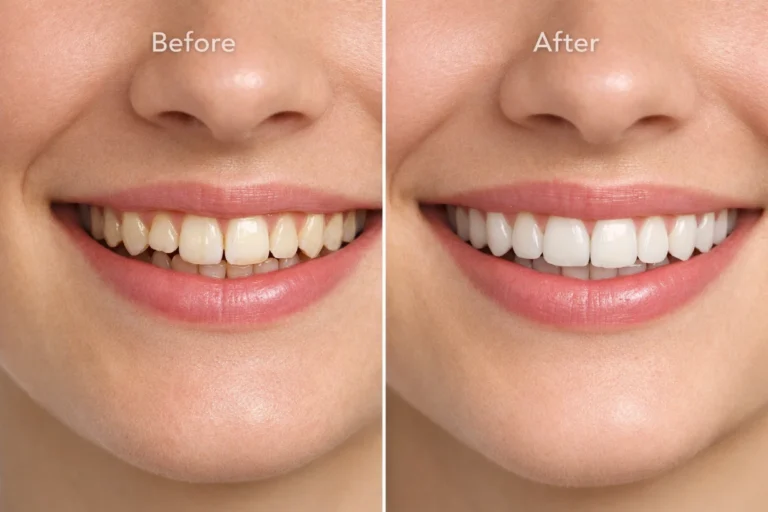
UK smile makeovers with composite bonding are becoming one of the most requested cosmetic dental treatments. People search for composite bonding before and after photos because they want to see real results, not just promises. We all want to know how much change is possible, how natural the teeth will look, and what the process feels like from start to finish.
What Is Composite Bonding in a UK Smile Makeover?
Composite bonding is a cosmetic dental treatment that uses tooth colored resin to reshape, rebuild, or recolor the teeth. In a UK smile makeover, composite bonding can be used on its own or combined with whitening, contouring, or even orthodontics.
Instead of placing crowns or veneers that require heavy drilling, the dentist bonds a putty like resin to the tooth surface, then sculpts and polishes it. The material blends with your natural enamel so well that, in good lighting, most people cannot tell where your tooth ends and the bonding begins.
When we talk about composite bonding before and after, we are usually looking at:
- Closing small gaps between teeth
- Improving the shape of short or worn teeth
- Covering chips or minor fractures
- Masking stains that do not respond to whitening
- Smoothing uneven edges
For many patients in the UK, it is a quick and relatively gentle way to refresh a smile without long recovery time or invasive work.
Common Smile Problems Composite Bonding Can Fix
Most people who search for composite bonding before and after results have specific worries about their teeth. They may feel shy in photos, hide their smile in public, or avoid smiling in job interviews. We often see the same set of issues, and composite bonding can often help.
Chipped or Fractured Teeth
A chipped front tooth can feel dramatic, even if the damage is small. The front teeth play a strong role in self confidence and first impressions. With composite bonding, the dentist rebuilds the missing piece, matches the color, and reshapes the edge for a smooth finish.
In many composite bonding before and after cases, the chipped tooth looks whole again in less than an hour, and the patient walks out smiling instead of worrying every time they see a mirror.
Small Gaps Between Teeth
Not everyone wants braces or clear aligners just to close one or two small gaps. For tiny spaces between teeth, especially the front two teeth, bonding can be a simple option.
The dentist adds composite to the sides of the teeth to gently bring them closer together. The final result in composite bonding before and after images often shows a more even and aligned smile line without months of orthodontic treatment.
Discoloration and Stains
Some stains do not improve with whitening. These can be caused by trauma, certain medicines, or enamel defects. Composite bonding allows the dentist to place a new, clean surface over the discolored area while keeping most of the natural tooth.
When we compare composite bonding before and after for discoloration, the biggest change is usually how people feel when they smile, because the eye no longer goes straight to that one dark or yellow patch.
Worn, Short, or Uneven Teeth
Years of grinding, nail biting, or acid wear can shorten and flatten the front teeth. This can make a smile look older or tired. Bonding can rebuild the original length and shape of these teeth.
Many UK patients who see their composite bonding before and after photos notice that their face seems more balanced, because longer front teeth can support the lips better and give a more youthful look.
Step by Step: What Happens During Composite Bonding?
Knowing what to expect reduces fear and helps you decide if this treatment feels right. While every clinic has its own routine, most UK composite bonding smile makeovers follow a similar path.
1. Smile Assessment and Planning
You begin with a consultation. The dentist listens to your main concerns and studies your teeth, bite, and gum health. They may take photos, X rays, or digital scans. Many clinics will show sample composite bonding before and after cases similar to yours.
Together, you decide which teeth need bonding, how many teeth will be treated, and whether you need whitening first. Planning is key, because once the composite is placed, the color cannot be lightened with bleach.
2. Optional Teeth Whitening Before Bonding
If you want a brighter smile overall, most dentists will suggest whitening your teeth first. The composite is then matched to your lighter shade. This helps your composite bonding before and after results look even more dramatic, as both color and shape improve.
3. Minimal Preparation of the Teeth
Composite bonding often requires very little drilling. In some cases, the dentist may not remove any healthy enamel at all. They roughen the tooth surface slightly and apply a conditioning liquid, which helps the resin stick firmly.
For nervous patients, this lack of heavy drilling can be a major relief. One of the reasons many people in the UK choose bonding over crowns or porcelain veneers is that it preserves more natural tooth structure.
4. Layering and Sculpting the Composite
The dentist places soft composite resin on the tooth in small layers. They shape each layer with special tools, watching how the tooth looks from different angles. A bright blue curing light hardens each layer in seconds.
This stage is where skill and artistry matter. The best composite bonding before and after results come from dentists who understand how light passes through natural teeth and how to copy that with resin. They slightly vary the opacity and shade, add fine texture, and polish the surface to mimic enamel.
5. Final Shaping and Polishing
After the composite hardens fully, the dentist checks your bite and makes sure your teeth touch correctly. They then refine the shape with fine burs and finish with polishing discs until the surface is glossy and smooth.
At this point, your composite bonding before and after moment is real. Many patients describe a quiet sense of relief, then excitement, as they see their new smile in a hand mirror for the first time.
How Long Does Composite Bonding Last in the UK?
With proper care, composite bonding can last 5 to 7 years or more. Some people keep their bonding even longer with regular maintenance. Still, the material is not as hard as natural enamel or porcelain, so realistic expectations are important.
Over time, bonding can:
- Pick up stains from coffee, tea, red wine, or smoking
- Chip or wear if you bite hard objects
- Lose a bit of shine and need repolishing
Many UK clinics offer periodic polishing appointments to keep composite bonding before and after results looking fresh. Tiny chips can often be repaired by adding more composite instead of starting again from scratch.
Benefits of Composite Bonding for UK Smile Makeovers
People do not choose composite bonding only because of cost. There are several practical and emotional reasons it fits well into many lives.
Less Invasive Than Many Alternatives
Composite bonding usually keeps most of the natural tooth. Crowns and some veneers require more drilling and removal of enamel. For younger patients or those with healthy teeth who only want cosmetic changes, bonding often feels like a gentler choice.
Fast Results in One Visit
Because the dentist works directly on the teeth, many smile makeovers using bonding can be completed in a single session per arch. That means you see your composite bonding before and after smile the same day, instead of waiting weeks for lab made restorations.
Often More Affordable
Costs vary across the UK, but composite bonding is usually less expensive per tooth than porcelain veneers or crowns. For people wanting a visible change without a luxury budget, this makes the treatment more accessible.
Reversible and Adjustable
Since so little tooth is removed, bonding is often partly reversible. If your taste changes or you later decide on porcelain veneers or orthodontics, adjustments can often be made without major damage to your natural teeth.
Limitations: When Composite Bonding Is Not Enough
Not every smile will be best served by composite alone. For some bite problems or very dark teeth, other options may give better long term results. A careful UK dentist will be honest about this before agreeing to treat you.
Bonding may not be ideal if you:
- Have large fractures or major decay
- Grind your teeth heavily at night and refuse to wear a night guard
- Need large changes in tooth position that really call for orthodontics
- Want a solution that is as resistant to stain and wear as possible
This is why we always suggest a full consultation rather than choosing any treatment based only on composite bonding before and after images online. Photos show appearance, not bite forces, gum health, or long term risk.
How Composite Bonding Before and After Changes Confidence
While the science and technique matter, the human side of smile makeovers matters too. We often see small but meaningful emotional shifts after treatment. People who used to cover their mouths when they laughed start to forget they ever did that. They begin to volunteer for group photos. They speak up more in meetings.
For some, composite bonding before and after does not only mean whiter, straighter looking teeth. It also marks a moment when they allowed themselves to care about their own comfort and appearance without guilt.
Many UK patients say they waited years before seeing a dentist about their cosmetic concerns because they feared judgement. A supportive team and a clear, realistic plan can turn that fear into a sense of partnership and control.
How to Care for Teeth After Composite Bonding
Good care helps protect your investment and keep your composite bonding before and after results looking close to the “after” for as long as possible.
Basic tips include:
- Brush twice a day with a soft toothbrush and fluoride toothpaste
- Floss daily or use interdental brushes
- Limit very dark drinks like black coffee or cola, or rinse with water after
- Avoid biting hard objects such as ice, pens, or hard sweets
- Wear a night guard if you grind your teeth
- See your dentist at least once or twice a year for checkups and cleaning
If you notice a rough edge, a chip, or a sudden change in color, contact your dentist early. Small repairs are often quick and inexpensive if caught soon.
Choosing a UK Dentist for Composite Bonding
Not every dentist focuses on cosmetic work, and composite bonding is both a technical and artistic skill. When you look for a clinic for a UK smile makeover, pay attention to a few key points.
Ask to see composite bonding before and after photos of cases the dentist has done themselves, not just stock images. Look for results on teeth that resemble your own starting point. Notice whether the teeth look natural, with gentle variation, or too flat and opaque.
Read patient reviews and notice any repeated comments about communication, care, and long term satisfaction. A good cosmetic dentist should listen closely to your wishes, explain your options clearly, and avoid pushing you toward the most expensive route.
Finally, ask about maintenance. A responsible clinic will not only tell you the best composite bonding before and after story. They will also be honest about how to keep that “after” looking good for years and what to expect in terms of touch ups and future costs.
Frequently Asked Questions About Composite Bonding Before and After
How much does composite bonding cost per tooth in the UK?
Prices vary by region and by the complexity of the case, but many UK practices charge somewhere between £150 and £350 per tooth for cosmetic composite bonding. Front teeth that need detailed shaping often sit at the higher end. A full quote should be given after your consultation, once your dentist sees how much work is needed for your own composite bonding before and after plan.
Is composite bonding painful?
Most people feel little to no pain during composite bonding. In many cases, no numbing injection is needed, because the dentist is working on the surface of the tooth without going near the nerve. You may feel some gentle pressure or vibration, but it is usually far more comfortable than having a filling or crown prepared.
Can I whiten my teeth after composite bonding?
Whitening gel does not lighten composite material. Only your natural enamel will change color. This is why dentists usually suggest whitening before bonding, then matching the composite to the lighter shade. If you whiten after, your bonding may look darker than your natural teeth, which can spoil your composite bonding before and after effect.
Will composite bonding damage my natural teeth?
When done correctly, composite bonding is considered a conservative treatment. The dentist often removes little or no healthy enamel. If the bonding is later removed, the tooth underneath should be mostly unchanged. However, any dental work carries some risk, so it is important to choose a dentist who is experienced in cosmetic bonding and careful with tooth preparation.
How many visits do I need for a composite bonding smile makeover?
Many small cases can be completed in one visit per arch, plus an initial consultation. If you choose to whiten first, you may need one or two whitening appointments or a home whitening period, then the bonding visit. Complex full smile cases may need two or more bonding sessions to allow for rest breaks and careful checking.
Does composite bonding look natural in real life?
High quality composite bonding can look very natural, especially when done by a dentist with a good eye for detail. They will copy the tiny textures, color changes, and shine levels of real enamel. Good lighting and photography can show this in composite bonding before and after images, but the real test is how the teeth look in normal daylight and how they blend into your face.
Can composite bonding fix crooked teeth?
Composite bonding can mask mild crowding or small rotations by reshaping the visible parts of the teeth. For more serious misalignment, orthodontic treatment such as braces or clear aligners is usually safer for your bite and jaw. A trustworthy UK dentist will explain whether your crooked teeth are suitable for a cosmetic composite bonding before and after makeover or whether moving the teeth first is better.