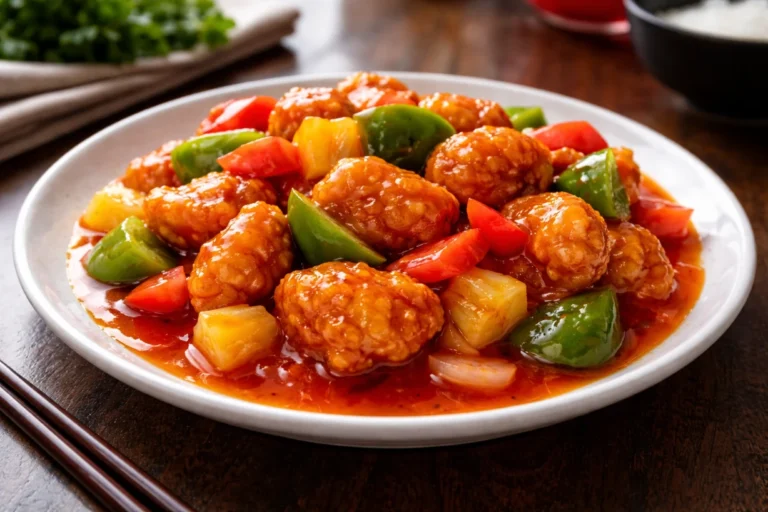
Sweet and sour chicken Hong Kong style is one of those dishes that makes us feel at home, whether we eat it in a busy Chinese restaurant or at our own kitchen table. The bright red sauce, the crispy chicken, the mix of pineapple and peppers, and that perfect balance of tangy and sweet flavors make this dish special for both children and adults.
What Makes Sweet And Sour Chicken Hong Kong Style Special
When we say sweet and sour chicken Hong Kong style, we talk about a version that is lighter, brighter, and more balanced than many takeout versions. The sauce has a clear, glossy look. The chicken stays crisp even after it is coated. The vegetables are still a bit crunchy, not soft or soggy.
In Hong Kong, people care a lot about texture and balance. Sweet, sour, and salty flavors must work together. The dish should feel fresh, not heavy. This is what we aim for in this recipe. We want each bite to have crisp chicken, juicy pineapple, and a clean, sharp but pleasant flavor from the sauce.
Key Ingredients For Authentic Hong Kong Style
To make sweet and sour chicken Hong Kong style at home, we focus on a few main groups of ingredients: chicken, marinade and coating, vegetables and fruit, and of course the sauce. Simple pantry items can build deep flavor when used in the right way.
Best Cut Of Chicken To Use
We can use either chicken breast or chicken thigh. Both work, but they give a slightly different result:
- Chicken breast: lean, very common in restaurants, gives a light bite and stays white inside.
- Chicken thigh: more juicy and forgiving, harder to overcook, with richer flavor.
For a classic sweet and sour chicken Hong Kong style like many Hong Kong diners serve, we often choose boneless, skinless chicken breast cut into medium chunks. Thigh works well if you prefer extra tenderness.
Essential Pantry Items
For a true Hong Kong style taste, the sauce needs a few basic Asian pantry items that many of us already know:
- Rice vinegar or white vinegar for the sour flavor.
- Ketchup for color and gentle sweetness.
- Light soy sauce for a touch of salt and depth.
- Sugar to balance the sharpness of the vinegar.
- Cornstarch to thicken the sauce and to coat the chicken.
We do not need any rare ingredients. The magic comes from the right ratio and the quick cooking method that keeps everything bright and fresh.
Full Recipe: Sweet And Sour Chicken Hong Kong Style
This recipe is written so someone cooking Chinese food for the first time can follow along. At the same time, it offers enough detail for home cooks who want a taste close to what they remember from Hong Kong style restaurants.
Ingredients
For the chicken:
- 1 pound (about 450 g) boneless, skinless chicken breast or thigh
- 1 teaspoon soy sauce
- 1 teaspoon Shaoxing wine or dry sherry (optional but helpful)
- 1/2 teaspoon salt
- 1/4 teaspoon white pepper or black pepper
- 1 egg white
- 1/2 cup cornstarch (for coating)
- Oil for deep or shallow frying (vegetable, canola, or peanut oil)
For the vegetables and fruit:
- 1 medium green bell pepper, cut into bite-size pieces
- 1 medium red or yellow bell pepper, cut into bite-size pieces
- 1 small onion, cut into wedges or chunks
- 1 cup pineapple chunks (fresh or canned, drained)
For the Hong Kong style sweet and sour sauce:
- 1/4 cup ketchup
- 3 tablespoons sugar
- 3 tablespoons rice vinegar or white vinegar
- 1 tablespoon light soy sauce
- 1/3 cup water or pineapple juice (from the can if using canned pineapple)
- 1 1/2 teaspoons cornstarch (mixed with 2 tablespoons water to make a slurry)
Step 1: Prepare And Marinate The Chicken
Cut the chicken into even chunks about 1 to 1.5 inches wide. Try to make the pieces close in size so they cook at the same rate. Place them in a bowl.
Add soy sauce, Shaoxing wine if using, salt, pepper, and egg white. Mix gently with your hand or a spoon until every piece is coated. The egg white gives the chicken a soft, silky coating, which is a common trick in Hong Kong style stir fry dishes.
Let the chicken sit for at least 15 minutes. If you have more time, 30 minutes in the fridge is even better. This short rest lets the flavors settle into the meat.
Step 2: Prep The Vegetables And Pineapple
While the chicken marinates, wash and cut the peppers and onion. Aim for pieces that are similar in size to the chicken. This helps the final dish look balanced and cook evenly.
Drain the pineapple if using canned. Pat it dry with a paper towel so it does not water down the sauce later. Fresh pineapple should be ripe but still firm.
Step 3: Mix The Sweet And Sour Sauce
In a small bowl, combine ketchup, sugar, vinegar, soy sauce, and water or pineapple juice. Stir until the sugar starts to dissolve.
In a separate small bowl, mix the cornstarch with water to make a smooth slurry with no lumps. We will add this later to thicken the sauce. Keeping it separate prevents clumps and gives us more control over the final texture.
Step 4: Coat And Fry The Chicken
Place the 1/2 cup of cornstarch in a shallow dish. Add the marinated chicken pieces and toss to coat. Shake off any extra cornstarch. The coating should be light, not thick like heavy batter.
Heat oil in a deep pan or wok over medium high heat. To test if the oil is ready, drop a small pinch of cornstarch in. It should bubble right away but not burn at once.
Fry the chicken in small batches so the pieces do not stick together and the oil does not cool down too much. Each batch takes about 4 to 5 minutes, until the chicken turns light golden and crisp. Place the fried pieces on a plate lined with paper towels.
For extra crisp texture, some Hong Kong kitchens fry the chicken a second time over higher heat for about 30 seconds. This step is optional, but it gives that classic crunch many of us remember from restaurant sweet and sour chicken Hong Kong style.
Step 5: Stir Fry Vegetables And Build The Sauce
Pour out most of the frying oil, leaving about 1 to 2 tablespoons in the wok or pan. Heat over medium high heat until it shimmers.
Add the onion first and stir fry for about 30 seconds. Add the peppers and cook for about 1 to 2 minutes more. We want them to stay bright and still a bit crisp, not fully soft.
Add the pineapple chunks and toss briefly. Then pour the prepared sweet and sour sauce mixture (without the slurry yet) into the pan. Let it come to a gentle boil.
Step 6: Thicken The Sauce And Combine With Chicken
Once the sauce is bubbling, give the cornstarch slurry a quick stir and slowly pour it into the pan while stirring. The sauce will start to thicken and become glossy. If it gets too thick, add a bit more water. If it is too thin, you can add a little more slurry.
When you are happy with the sauce texture, add the fried chicken pieces. Toss everything gently so each piece of chicken and each bit of pepper and pineapple gets a thin coat of sauce.
Taste the sauce. For some, sweet and sour chicken Hong Kong style should lean a little more to the sour side. Others enjoy a bit more sugar. Adjust with a small spoon of sugar or a splash of vinegar until it matches your own memory or taste.
Serving Suggestions For Hong Kong Style Sweet And Sour Chicken
Serve the dish at once while the chicken is still crisp and the sauce is hot. Plain steamed jasmine rice is the most common partner, since it soaks up the sauce without competing with the flavor.
To turn this into a full Hong Kong style meal at home, we like to pair it with a simple vegetable dish such as stir fried bok choy, garlic green beans, or a clear broth soup. This keeps the meal balanced and not too heavy.
How To Keep The Chicken Crispy
One reason people love sweet and sour chicken Hong Kong style in restaurants is the crisp coating that holds up under the sauce. At home, the chicken can start to soften if it sits too long. A few small habits help keep the crunch:
- Do not add the chicken to the sauce until you are ready to serve.
- Coat the chicken with cornstarch only right before frying.
- Use hot oil, and avoid crowding the pan so the coating fries, not steams.
- If you expect leftovers, keep some chicken pieces separate from the sauce.
Adjusting The Recipe To Your Taste And Diet
One of the best parts of cooking sweet and sour chicken Hong Kong style at home is the power to change small details so the dish fits your own needs. We can manage how sweet, how sour, and how rich the sauce is.
Less Sugar, Lighter Sauce
If you prefer a lighter dish, you can reduce the sugar by one third and use extra pineapple juice instead of some of the water. This keeps the sauce bright but less sweet. You can also use a bit of honey for a softer kind of sweetness.
For those watching oil intake, try shallow frying in a smaller amount of oil and turning the pieces often, or even using an air fryer with a light spray of oil. The texture will be slightly different, but the flavor of sweet and sour chicken Hong Kong style still shines through.
Gluten Free Or Allergy Friendly Options
To make the dish gluten free, use a gluten free soy sauce or tamari and check that your ketchup and vinegar are gluten free. The cornstarch is already gluten free, so the coating and the sauce thickener do not need changes.
If someone in the family cannot eat egg, you can skip the egg white in the marinade. The coating will still cling, though the chicken may feel a bit less silky inside.
Common Mistakes And How To Avoid Them
Even a simple recipe like sweet and sour chicken Hong Kong style can go wrong if we rush or skip certain steps. These are the most common problems and how to prevent them:
Soggy chicken: This often comes from oil that is not hot enough or from adding the chicken to the sauce too early. Make sure the oil is hot before frying and wait to combine chicken and sauce until serving time.
Dull, cloudy sauce: A bright, clear sauce is a sign of good Hong Kong style technique. Too much cornstarch or cooking the sauce too long can make it heavy. Stick to the small amount of slurry, and remove the pan from heat once the sauce thickens and shines.
Overcooked vegetables: Cook the peppers and onion just until they brighten and soften slightly. We want them to keep some crunch, not turn mushy. Quick, high heat stir fry is key.
Unbalanced flavor: If the sauce tastes too sour, add a bit more sugar or a splash of pineapple juice. If it is too sweet, add a tiny bit more vinegar and a pinch of salt. Adjust in small steps until you reach the clean, balanced taste of true sweet and sour chicken Hong Kong style.
Storing And Reheating Leftovers
If you happen to have leftovers, place them in an airtight container in the fridge. They keep well for up to 2 days. The coating will soften, but the flavor will still be very good.
For reheating, we like to use a pan on the stove over medium heat, adding a spoon of water if the sauce has become too thick. Stir gently until heated through. If you kept some chicken pieces separate from the sauce, reheat them in an air fryer or hot oven for a few minutes, then add to warmed sauce and vegetables.
Why This Dish Means More Than Just Takeout
For many families, sweet and sour chicken Hong Kong style is tied to birthdays, Sunday lunches, or shared plates at a favorite Chinese restaurant. The smell of hot oil, pineapple, and vinegar rising together can bring us back to those tables where we passed plates around and argued over the last crunchy piece.
Cooking this dish at home lets us keep those memories alive while adding our own stories. Some of us might add extra pineapple for children who love the fruit. Others might cut back on sugar for older family members. Over time, the recipe slowly becomes our own version, rooted in Hong Kong style but shaped by our daily lives.
By learning the basic method and flavor balance, we give ourselves a base we can return to over and over. Every time we cook sweet and sour chicken Hong Kong style, we have another chance to adjust, taste, and share. That simple act of tasting and sharing is a quiet kind of care that many of us grew up with, and now pass forward.
Frequently Asked Questions About Sweet And Sour Chicken Hong Kong Style
Can I make sweet and sour chicken Hong Kong style without deep frying?
Yes. While deep frying gives the most classic texture, you can shallow fry in a smaller amount of oil or use an air fryer. Coat the marinated chicken lightly with cornstarch, spray with oil, and air fry until golden. The coating will be slightly less crisp than deep fried, but the sauce and flavor will still be close to the original.
What is the difference between Hong Kong style and regular sweet and sour chicken?
Hong Kong style sweet and sour chicken usually has a lighter, clearer sauce, fresher vegetables, and a strong focus on balance between sweet and sour. The coating on the chicken is crisp but not thick or bready. Some Western takeout versions use a very thick batter and a very sweet, heavy sauce. The Hong Kong style version feels more delicate and bright.
Can I use pork instead of chicken in this recipe?
Yes, the same method works well with pork. Cut lean pork shoulder or pork loin into bite-size pieces, marinate and coat just like the chicken, and fry until cooked through. Many Hong Kong restaurants serve sweet and sour pork as a close cousin to sweet and sour chicken Hong Kong style.
How do I stop the sauce from turning too thick or gluey?
Use only the small amount of cornstarch slurry listed, and add it slowly while stirring the boiling sauce. Once the sauce thickens and becomes glossy, remove the pan from heat. If it becomes too thick, stir in a bit of water or pineapple juice until it loosens but still clings to the chicken.
Is canned pineapple okay for Hong Kong style sweet and sour chicken?
Canned pineapple works well and is common in home kitchens. Just drain it fully and pat it dry so it does not thin the sauce. You can also use some of the pineapple juice instead of water in the sauce to add more fruit flavor to your sweet and sour chicken Hong Kong style.
Can I prepare parts of the recipe ahead of time?
Yes. You can cut the vegetables, mix the sauce (without the slurry), and even marinate the chicken a few hours ahead and keep it in the fridge. Wait to coat the chicken with cornstarch and fry it until just before serving. Also wait to thicken the sauce and combine everything until the last minute to keep the coating crisp.
What should I serve with sweet and sour chicken Hong Kong style?
Plain steamed rice is the most classic choice. For a full meal, you can add a simple stir fried green vegetable or a clear soup. Some people also enjoy serving it with egg fried rice or chow mein noodles, but rice keeps the focus on the bright flavors of the chicken and sauce.
Can I make this dish spicier?
Yes, you can add a small amount of chili to give your sweet and sour chicken Hong Kong style a gentle heat. Slice a fresh chili pepper and stir fry it with the vegetables, or add a pinch of chili flakes or a bit of chili sauce to the sweet and sour sauce. Keep the heat level low enough so it does not cover the delicate sweet and sour balance.