
Many people start wondering how many teeth do humans have the first time they see a child lose a tooth or feel a new wisdom tooth push through. Teeth shape our smile, help us speak clearly, and let us enjoy food. Yet most of us never stop to count them or think about how they change from childhood to adult life.
How Many Teeth Do Humans Have At Each Stage Of Life?
The clearest way to answer how many teeth do humans have is to look at teeth by age. A small child, a teenager, and an older adult can all have very different tooth counts, and all of them can be normal.
Baby Teeth: The First Set (Primary Teeth)
Babies are born with teeth hidden under the gums. These are called primary or baby teeth. They start to show through around 6 months of age, although there is wide variation. Some babies cut their first tooth at 3 months, some closer to 12 months.
Most children have a full set of baby teeth by about age 3. The full number is 20 primary teeth. These include:
- 4 central incisors
- 4 lateral incisors
- 4 canines
- 8 molars
So for young children, how many teeth do humans have? The normal answer is 20. These teeth are smaller, whiter, and spaced out a bit to leave room for future permanent teeth.
Adult Teeth: The Second Set (Permanent Teeth)
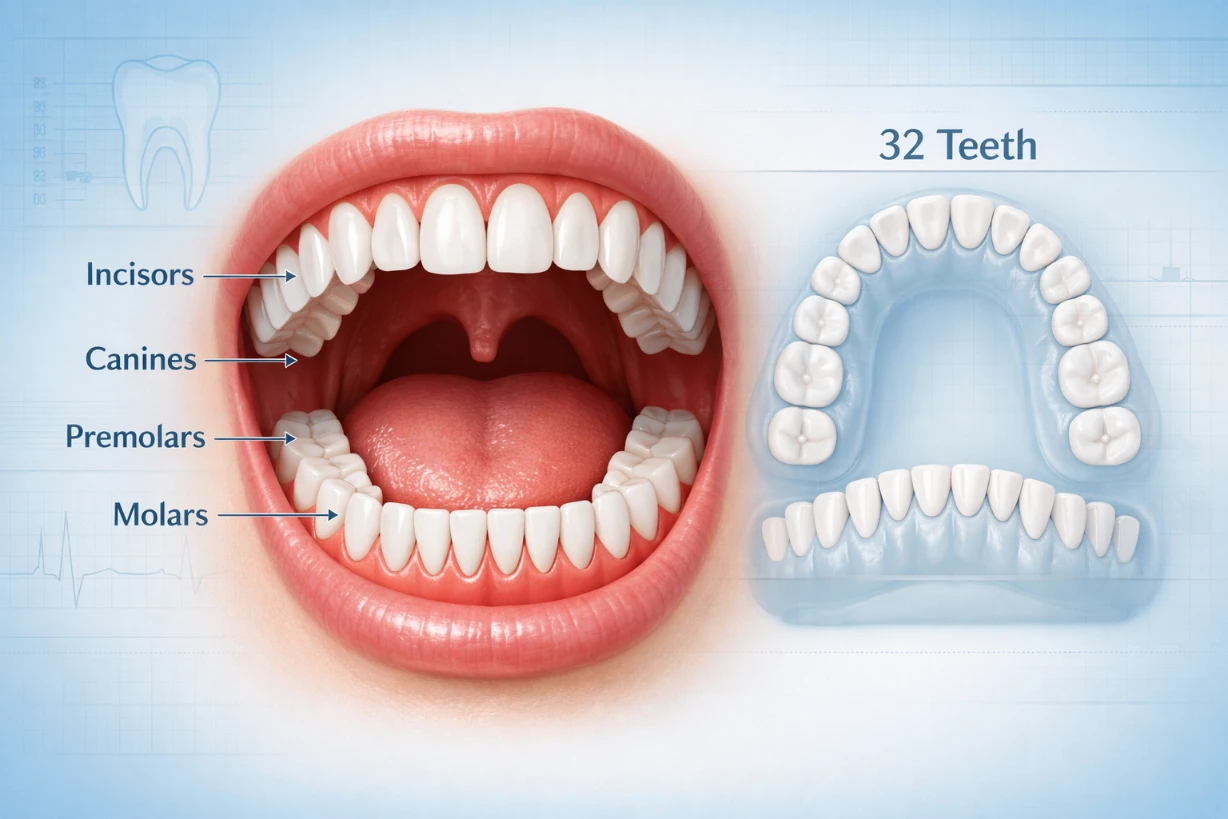
Permanent teeth begin to push through around age 6 and keep coming in through the teenage years. Most adults end up with 32 permanent teeth if none are missing or removed. These are:
- 8 incisors (front cutting teeth)
- 4 canines (sharp teeth used to tear food)
- 8 premolars (also called bicuspids)
- 12 molars (including 4 wisdom teeth)
This is the standard answer many dentists give when someone asks how many teeth do humans have in total as adults. But in real life, many adults have fewer than 32 teeth because of wisdom tooth removal, decay, injury, or birth differences.
How Many Teeth Do Humans Have Without Wisdom Teeth?
Wisdom teeth are the last molars in the very back of the mouth. There are up to four of them, one in each corner. They usually appear between ages 17 and 25, but some never come in at all.
If all four wisdom teeth are removed or never form, an adult will have 28 teeth. This is still considered fully functional and healthy. So another common, correct answer to how many teeth do humans have is 28, because that is the number of teeth most adults actually use for chewing and speaking every day.
Types Of Teeth And What Each One Does
Knowing how many teeth do humans have is only one part of the story. Each type of tooth has a special shape and job. Together, they work like a small team inside the mouth.
Incisors: The Cutting Teeth
The incisors are the front teeth that show when you smile. There are eight of them, four on top and four on bottom. They have a thin, sharp edge used to cut and bite into food, such as apples or sandwiches.
Incisors also shape how you say certain sounds, like “t” and “s.” Damage or loss of these teeth can change speech and the way lips rest at the front of the mouth.
Canines: The Corner Teeth
Canines sit next to the incisors, at the “corners” of the mouth. Humans have four of them. They have a pointed tip that helps tear food, especially tougher foods like meat.
Canines also guide the rest of the teeth when you move your jaw side to side. They act like small anchors that help protect other teeth from too much grinding force.
Premolars: The First Grinding Teeth
Behind the canines are the premolars, also called bicuspids. Adults have eight premolars, four on each jaw. Children do not have premolars in their primary set; these appear only with permanent teeth.
Premolars have a broad, flat surface with ridges. They help crush and grind food so it can be swallowed easily. They also help keep the bite balanced, so forces are spread out across the mouth.
Molars: The Heavy Workers
Molars are the big teeth in the back. Adults can have up to 12 molars if all wisdom teeth are present, while children have eight primary molars that later fall out.
Molars break food down into very small pieces. When we chew on tough or crunchy food, molars take the main load. Because they work so hard, they are more at risk for cavities, especially in the deep grooves and pits on top.
Typical Tooth Timeline: From Baby To Adult
To answer how many teeth do humans have at specific ages, we also need to look at how teeth erupt and fall out over time.
When Do Baby Teeth Come In And Fall Out?
Most babies follow this pattern, though there is plenty of normal variation:
- 6 to 12 months: First incisors appear
- 9 to 16 months: More front teeth and first baby molars
- 16 to 23 months: Canines and second baby molars come in
- By about age 3: All 20 baby teeth are in place
Baby teeth usually start to fall out around age 6, beginning with the front incisors. This process continues until around age 12 to 13, when most children have replaced baby teeth with permanent teeth.
When Do Adult Teeth Come In?
Most children get their first permanent molars behind the baby molars around age 6. These are sometimes called the “six-year molars.” Then front permanent teeth begin to appear where baby teeth have fallen out.
By ages 12 to 13, most children have 28 permanent teeth, not counting wisdom teeth. The final set, the wisdom teeth, may appear later in the late teens or early twenties, or may never appear at all.
Why Tooth Counts Can Differ Between People
Tooth numbers in textbooks are clean and fixed, but real mouths are not always that simple. When we talk about how many teeth do humans have, we also need to allow room for natural differences and health issues.
Missing Teeth From Birth (Hypodontia)
Some people are born missing one or more permanent teeth. This is called hypodontia. The most common missing teeth are the lateral incisors or second premolars. In these cases, how many teeth do humans have as adults can drop from 32 to 31 or fewer without any extractions.
Severe forms, where many teeth are missing from birth, are called oligodontia. These cases often need special care with braces, implants, or bridges to help with chewing and appearance.
Extra Teeth (Hyperdontia)
The opposite problem can also occur. Some people grow extra teeth, called supernumerary teeth. These may appear behind or between normal teeth.
Extra teeth can make it harder for other teeth to line up correctly. Dentists often remove them, especially if they block permanent teeth from coming in. So again, when counting how many teeth do humans have, people with hyperdontia may start with more than 32, but end up with a healthy, smaller number after treatment.
Teeth Removed For Health Or Space
Many adults lose teeth during their lives. Common reasons include:
- Untreated cavities that damage the tooth beyond repair
- Advanced gum disease that loosens teeth
- Accidents or sports injuries
- Planned removal for braces, usually premolars
- Wisdom teeth removal due to pain, infection, or lack of space
Because of this, it is very common for an adult to have 24, 26, or 28 teeth and still have a comfortable bite. Dental care aims to keep as many natural teeth as possible, but also to protect the person’s overall health and comfort.
How Tooth Count Affects Chewing, Speech, And Health
When we ask how many teeth do humans have, we are also really asking how many teeth we need to live well. The number and position of teeth affect daily life in several ways.
Eating And Digestion
Teeth start the digestive process. Incisors bite, canines tear, premolars and molars crush and grind. If key teeth are missing, people may avoid certain foods, like nuts, raw vegetables, or meat.
Over time, poor chewing can affect nutrition. Some people may lean on soft, processed foods that do not support long-term health. Restoring missing teeth with crowns, bridges, or implants can support better eating habits.
Speech And Appearance
Front teeth shape sounds and give structure to the lips and cheeks. Missing teeth can cause slurring or whistling when speaking. Gaps, especially in the front, can also change how a person feels about their smile, which can affect confidence in social and work settings.
Orthodontic care and restorative dentistry aim to give a balanced look and a bite that fits the person’s face, not just a fixed number of teeth.
Jaw Joint And Muscle Balance
The jaw joints and muscles work best when teeth fit together in a steady pattern. Missing teeth or badly aligned teeth can overload remaining teeth or strain the jaw joints. This may lead to:
- Headaches
- Jaw pain or clicking
- Tooth wear or fractures
So while the question how many teeth do humans have sounds simple, the real goal is not just a number. The goal is a set of teeth that work together smoothly and support the rest of the face and jaw.
How To Care For The Teeth You Have
Whatever your personal answer is to how many teeth do humans have, those teeth need care. Healthy daily habits make the biggest difference over time.
Daily Home Care
Most dentists recommend:
- Brushing twice a day with fluoride toothpaste
- Flossing once a day to clean between teeth
- Rinsing with water after sugary snacks or drinks
- Using a soft toothbrush and gentle pressure to protect gums
Children need help brushing well until they have the hand skills to tie their own shoes. This keeps both baby and adult teeth strong.
Regular Dental Visits
Seeing a dentist every six months allows early detection of cavities, gum disease, and bite problems. X-rays help count how many teeth do humans have in that mouth, including teeth that have not yet come in, like developing wisdom teeth.
Fluoride treatments, sealants on back teeth, and cleanings can prevent many problems that would later lead to tooth loss.
Common Questions About Human Tooth Count
How many teeth do humans have at age 5?
Most 5-year-old children still have a full set of 20 baby teeth. Some may have started to lose front teeth, but they usually have not yet gained many permanent teeth. So the typical count at this age is 20.
How many teeth do humans have when all adult teeth are in?
When all permanent teeth are present, including wisdom teeth, adults have 32 teeth. If wisdom teeth are missing or removed, the number is 28. Both are considered normal, healthy adult tooth counts.
Is it normal to have 28 teeth?
Yes, it is very common. Many people never grow all four wisdom teeth, or they have them removed. Having 28 teeth can still give a strong, complete bite when the teeth are well aligned.
Can a person have more than 32 teeth?
Some people do have extra teeth, called supernumerary teeth. These extra teeth may stay hidden or may crowd the mouth. Dentists often remove them to protect the bite and avoid problems.
How many teeth do humans have if they lose teeth from gum disease?
The number can vary a lot. Gum disease can cause several teeth to loosen and fall out over time. People may end up with 20, 18, or even fewer natural teeth. In these cases, dentists may suggest partial dentures, full dentures, or implants to restore chewing and appearance.
Do wisdom teeth always need to be removed?
No. Wisdom teeth only need removal if they cause pain, crowd other teeth, become infected, form cysts, or are too hard to clean. If wisdom teeth are healthy, fully erupted, and easy to clean, they can stay in place as part of the normal 32.
Why does my dentist care how many teeth I have if my mouth feels fine?
Tooth count helps the dentist see the full picture of your mouth. Knowing how many teeth do humans have in your case, and exactly which ones, helps plan treatments, watch for future problems, and protect your bite and jaw health over time.
So while the basic answer to how many teeth do humans have is 20 baby teeth and up to 32 adult teeth, the more useful answer is this: humans have enough teeth, in the right places, to bite, chew, speak, and smile with comfort. Caring for whatever number of teeth you have is what keeps that true for a lifetime.