
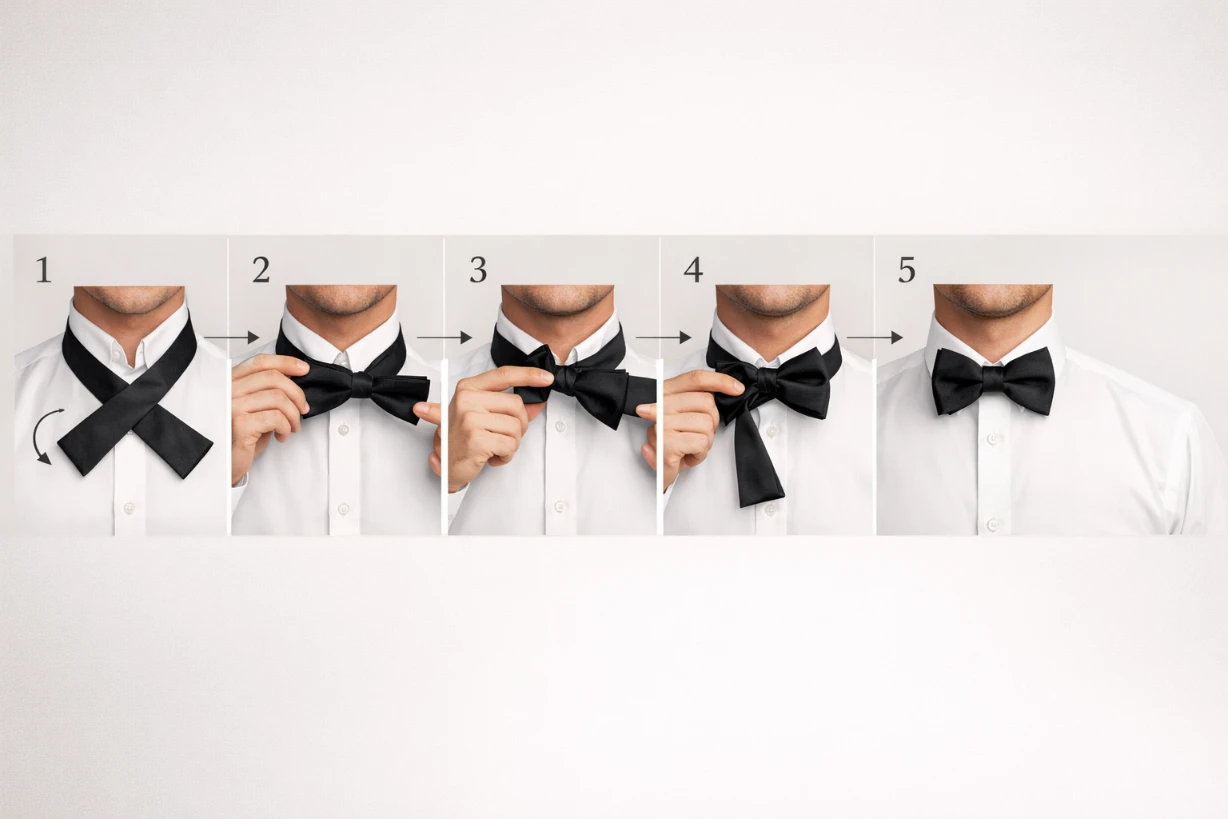
A bow tie can change how a whole outfit feels. It adds charm, personality, and a touch of old‑school style that a regular necktie cannot match. Many people search how to tie a bow tie and give up when it seems confusing. The good news is that tying a bow tie is a skill anyone can learn with simple steps, patience, and a bit of practice.
Why Learning How To Tie A Bow Tie Matters
Knowing how to tie a bow tie is more than a party trick. It gives you freedom and confidence. You do not need to rely on clip‑on versions that often look flat or childish. A self‑tied bow tie has small imperfections that show personality and care. That is what people notice at weddings, job events, dates, and formal dinners.
When we know how to tie a bow tie, we also gain control over our style. We can adjust the size, the looseness, and the shape to match our face and collar. That sense of control often makes us stand taller and feel more comfortable in social settings.
What You Need Before You Start
Before we walk through how to tie a bow tie step by step, it helps to set things up right. Preparation makes the process smoother and less stressful.
Choose the Right Bow Tie
Not all bow ties are the same. When learning, we suggest a simple, classic style.
- Type: Self‑tie (also called freestyle) bow tie, not clip‑on or pre‑tied.
- Fabric: Cotton or silk with a bit of structure. Satin can be slippery for beginners.
- Color: A solid, medium color (like navy or burgundy) makes folds easier to see than black.
- Size: Adjustable length, marked with neck sizes on the band.
Use a Mirror and Good Light
Stand in front of a mirror with bright, even light. A bathroom or bedroom mirror works well. Some people find it easier to first learn how to tie a bow tie while looking down at their hands, then switch to the mirror once the motions feel natural.
Set Your Collar and Top Button
Button your shirt all the way up and flip the collar up so it stands. This gives space for your fingers and makes the bow shape easier to see. You will fold the collar back down after the bow tie is tied.
Simple Step‑By‑Step Guide On How To Tie A Bow Tie
This is the classic method most people mean when they search how to tie a bow tie. We will go slowly and keep the moves clear. Take your time. It may feel strange the first few tries, but soon your hands will remember the pattern like muscle memory.
Step 1: Start With One End Longer Than the Other
Place the bow tie around your neck, under your collar, with the ends hanging down in front. Adjust so that the right side is about 1 to 2 inches longer than the left side. The longer end will be the one you move around the most.
The flat, wider ends should be at about the middle of your chest. If they hang too low, shorten the strap on the back of your neck. If they barely reach your chest, lengthen the strap.
Step 2: Cross and Form the First Knot
Cross the longer right end over the shorter left end, close to your neck. Then loop it up through the space between your neck and the crossed fabric, just like the first step of tying your shoes.
Pull both ends gently to tighten. You should now have a simple knot at your neck, with the left end hanging down in front and the right end lying on top.
Step 3: Form the Front “Bow” Shape
Now focus on the shorter end (the one currently hanging down on the left). Lift this end straight across your neck, from left to right, so it sits horizontally.
Fold this shorter end back toward your chest at the middle, creating a bow shape. Hold this folded bow with one hand at the center, right at the knot. This folded part will become the front half of the finished bow.
Step 4: Drop the Long End Over the Front Bow
Let the longer end (coming from the right side) fall straight down over the center of the folded bow you are holding. It should hang vertically and cover the knot and the middle of the front bow. This piece will later help form the back half of the bow tie.
Step 5: Fold the Back Bow and Find the “Hole”
Now comes the part that confuses many people when they first learn how to tie a bow tie. Stay calm and go slowly.
With the hand that is not holding the front bow, gently pinch the hanging long end near where it crosses the knot. Fold it back on itself horizontally, forming a bow shape similar to the front one, but behind it. You will notice that this folded piece sits behind the front bow, close to your neck.
Right behind the front bow, there is a small gap or “hole” between the layers of fabric. This is where the folded back bow will pass through. You do not push the whole long end through, only the middle of the folded bow shape.
Step 6: Push the Folded Back Bow Through
Still holding the front bow steady, take the folded back bow and gently push its center through that gap behind the front bow. It might feel snug, and that is normal.
Once it is partly through, you will see two loops on each side of your neck. One loop is the front bow, and one loop is the back bow. You will also have two straight ends sticking out from behind the loops.
Step 7: Tighten and Shape the Bow Tie
This last step is where your bow tie comes to life. To tighten and shape it, pull gently on opposite sides at the same time.
- Pull the front and back loop on the left side together.
- Then pull the front and back loop on the right side together.
Alternate from left side to right side, pulling a little at a time. Avoid yanking. As you do this, the knot in the center tightens, and the bow tie becomes more even.
Adjust the ends and loops until they look balanced. They do not need to be perfect. A small tilt or slight difference in size often makes a self‑tied bow look stylish and natural.
Step 8: Fold the Collar Down and Check the Fit
When you are pleased with the bow shape, fold your shirt collar down over the strap around your neck. Make sure the collar points sit neatly on top of the bow tie band.
The bow tie should feel snug but not choking. You should be able to slide one finger between the band and your neck. If it is too tight, loosen slightly by adjusting the loops. If it sags or droops, tighten the loops again.
Common Mistakes When Learning How To Tie A Bow Tie
Almost everyone runs into a few problems while learning how to tie a bow tie. Knowing these ahead of time can help you avoid frustration.
The Bow Tie Hangs Too Low
If your bow tie sits far down your chest, the strap is too long. Shorten the length at the back of your neck so the knot rests right at your Adam’s apple. A proper bow should sit at the middle of your collar, not near your second button.
The Loops Are Uneven or Lopsided
A slight tilt looks charming, but if one side is huge and the other tiny, adjust your starting lengths. Start again with the right end only slightly longer than the left, not by several inches.
Also, when you tighten the bow, pull evenly on both sides, not only one. Work slowly. Most uneven bows come from rushing.
The Knot Looks Messy or Bulky
This can happen if you twist the fabric while folding the bows or if you push too much material through the center gap. Try to keep the fabric flat when you fold the bow shapes.
If your bow tie fabric is very thick, you may need a looser knot. If it is very thin and slippery, you may need to pull a bit tighter and practice more precise folds.
Practice Tips To Master How To Tie A Bow Tie
No one becomes an expert on the first try. That includes people who now tie a bow in seconds. The key is gentle repetition and smart practice.
Practice Before the Big Event
Do not wait until fifteen minutes before a wedding or a ceremony to learn how to tie a bow tie. Practice several days before, when you are not under time pressure. Even five minutes a day in front of a mirror can make a huge difference.
Try Tying the Bow Tie Off Your Neck
Some people find it easier to first practice with the bow tie wrapped around a book or their thigh, where they can see every move from above. Once the finger motions feel familiar, move to your own neck.
Use Slow, Small Adjustments
Fast, strong pulling can twist the fabric and ruin the bow shape. Instead, make small, slow adjustments. Pull lightly, check in the mirror, and then pull again if needed. Gentle patience leads to a neater, more controlled look.
Different Styles Once You Know How To Tie A Bow Tie
Once you feel comfortable with the basic method of how to tie a bow tie, you can explore different looks. The tying steps stay almost the same. The changes come from fabric, width, and how tight or loose you tie it.
Classic Formal Bow Tie
This is the style most people wear with a tuxedo. It is usually black silk, medium width, with clean, even loops. You pull the bow fairly snug so the shape looks sharp. This style suits black‑tie events, formal dinners, and weddings.
Casual or Playful Bow Tie
For a more relaxed look, choose cotton, linen, or textured fabrics. Patterns like dots, stripes, or checks add fun. You can tie it slightly looser, with softer, rounder loops. This style pairs well with sport coats, suspenders, and rolled‑up sleeves.
Vintage or Wide Bow Tie
Some bow ties are cut wider, giving a bold, old‑Hollywood look. When learning how to tie a bow tie in a wider style, pay extra attention to balance. The loops should not overpower your face. Shorter people or those with narrow faces may prefer medium or slim widths.
Caring For Your Bow Tie So It Always Looks Sharp
A well‑kept bow tie lasts for years and always looks ready for a special moment.
Untie After Each Wear
Do not leave your bow tie permanently tied. Gently undo the knot and lay it flat. This helps the fabric rest and prevents deep creases that are hard to remove later.
Store It Flat or Lightly Rolled
Place your bow tie flat in a drawer, or loosely roll it and place it in a small box. Avoid tight folds and heavy pressure, which can leave lines and weaken the fabric over time.
Clean with Care
Silk bow ties often need dry cleaning. Cotton or linen may be hand‑washed with mild soap and air‑dried. Always check the label. When in doubt, treat it gently and avoid high heat or harsh chemicals.
When To Wear a Bow Tie Once You Know How To Tie It
After you learn how to tie a bow tie, you might look for more chances to wear it. Bow ties suit more occasions than many people think.
Great moments to wear a bow tie include:
- Weddings (as a guest, groom, or groomsman)
- Proms and school dances
- Job events where you want to stand out politely
- Dinners, holiday parties, or theater shows
- Everyday wear if it matches your personal style
The key is confidence. When you know how to tie a bow tie yourself, that confidence is real, not forced. You are not just wearing an accessory; you are using a skill you built with your own hands.
Final Thoughts: Make How To Tie A Bow Tie Your Own Skill
Learning how to tie a bow tie feels hard at first, but it quickly becomes a simple pattern your fingers remember. With the clear steps above, some patience, and a few quiet practice sessions, you can go from confusion to confidence.
Each time you tie your own bow tie, you send a small message about care, style, and self‑reliance. Whether you are dressing for a wedding, a job event, or just a night out, this classic skill will always serve you well. Keep this guide nearby, practice how to tie a bow tie a few more times, and soon you will be the person others turn to when they need help with their own bow ties.
Frequently Asked Questions
How long does it take to learn how to tie a bow tie?
Most people can learn the basic steps of how to tie a bow tie in 15 to 30 minutes of focused practice. To feel truly comfortable and quick, plan on tying it several times over a few days. Like tying shoes, the motion becomes natural with repetition.
Is tying a bow tie harder than tying a regular necktie?
At first, yes, it can feel harder than tying a standard necktie because there are more folds and a “hidden” step in the back. But once you understand where the back bow passes through, the process is no more complex than tying your shoelaces.
Should I use a clip‑on bow tie instead?
Clip‑on bow ties are faster, but they often look stiff and flat. A self‑tied bow tie has more character and usually looks better in photos and in person. If you learn how to tie a bow tie yourself, you can adjust the shape to suit your face and collar, which a clip‑on cannot offer.
Can I tie a bow tie if I am left‑handed?
Yes. The steps for how to tie a bow tie are the same, but you may find it more natural to start with the left side slightly longer or reverse some motions. After a few tries, your hands will find a pattern that feels right for you.
What size bow tie should I buy as a beginner?
An adjustable, medium‑width bow tie is best when you are first learning how to tie a bow tie. This usually means about 2 to 2.5 inches tall at the widest point of the bow. Extra‑wide or very skinny bow ties can be harder to shape evenly at first.
Why does my bow tie keep coming loose?
Your center knot may not be tight enough, or you may be pulling only on one loop instead of both sides. When tightening, gently pull on the front and back loops of one side together, then the loops on the other side, repeating until the bow feels secure but comfortable.
Can I learn how to tie a bow tie without a mirror?
Yes, though it usually takes longer. Some people practice how to tie a bow tie on their leg or a pillow first, just by feel. Once you understand the motion, you can tie it by touch alone, which is useful if you need a quick fix in a place without a mirror.