
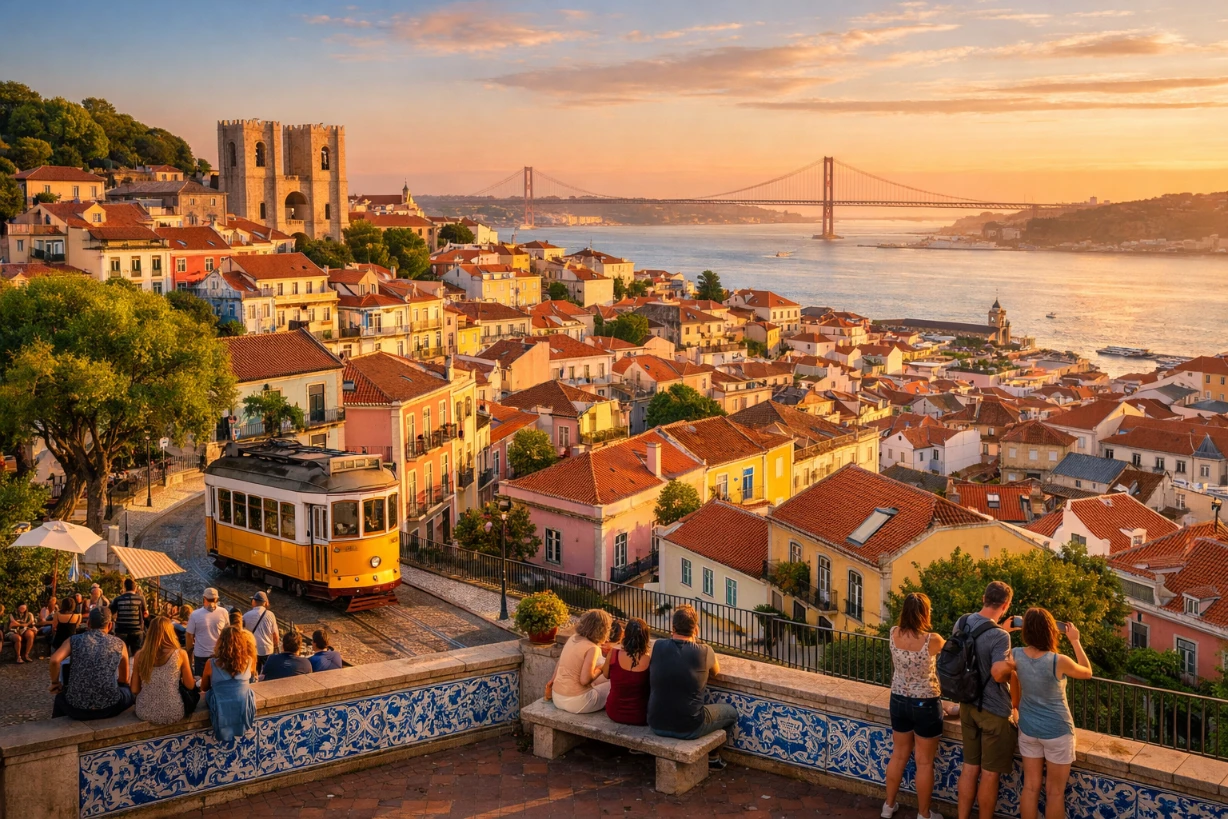
Lisbon feels like a city made for long weekends. Bright tiled buildings, yellow trams, sea air, and the smell of grilled fish drift through its steep streets. If you are planning a 3 day break and looking for the best things to do in Lisbon, this guide walks you through a full, realistic plan that mixes famous sights with local moments.
Why Lisbon Is Perfect For A 3 Day City Break
Lisbon is compact, walkable, and full of character. You can see grand monuments, centuries-old neighborhoods, modern museums, and ocean views without wasting time on long rides. Three days is just enough to feel the rhythm of the city, taste its food, and explore the top things to do in Lisbon at an easy pace.
We suggest using one day in the historic center, one day in Belém and the riverside area, and one day for side trips and local neighborhoods. This way you mix history, food, and simple joys like watching the sunset over the Tagus River.
Day 1: Classic Lisbon In The Historic Center
Start your city break with the core of Lisbon. The neighborhoods of Baixa, Chiado, Alfama, and Bairro Alto sit close together, so you can walk or take short rides between them.
Morning: Baixa And The Riverside
Begin in Baixa, the downtown area rebuilt after the 1755 earthquake. Its wide streets and grid layout are very different from Lisbon’s older, twisty lanes. Here are some of the best things to do in Lisbon on your first morning:
Walk through Praça do Comércio, the huge square open to the river. The yellow arcades, the statue of King José I, and the sound of waves and seagulls create a strong first impression. Many visitors stop for a coffee at one of the cafés under the arches and watch locals pass by on their way to work.
From the square, step onto Rua Augusta. Street performers, shops, and pastry stalls line this pedestrian street. At the end, climb or take the lift up the Arco da Rua Augusta. The view from the top shows Baixa, the castle on the hill, and the river, giving you a clear sense of the city’s layout.
Near Baixa, the Santa Justa Lift links the lower town to the higher Chiado area. Even if you do not ride it, it is worth a look. The iron structure feels a bit like a small piece of Paris in Lisbon. If the line is long, you can walk up through side streets instead.
Lunch: First Taste Of Local Food
For lunch, try traditional Portuguese dishes in Baixa or nearby Chiado. Look for grilled sardines in summer, salted cod (bacalhau) in many forms, and caldo verde, a light kale and potato soup. This is also a good time to try your first pastel de nata, the creamy custard tart Lisbon is famous for. Eating one fresh, still warm, is one of the must do things to do in Lisbon.
Afternoon: Alfama And São Jorge Castle
In the afternoon, head toward Alfama, the old Moorish quarter. This is the part of Lisbon that survived the earthquake, and you feel the age in its narrow lanes, stone steps, and small terraces where neighbors chat from windows.
We suggest walking up to Castelo de São Jorge first. The climb is steep but short, or you can use a taxi or rideshare. Inside the castle walls you get some of the best views in Lisbon. Red rooftops, church towers, and the wide Tagus River spread out below. Take your time to walk along the ramparts and through the gardens where peacocks often wander.
After the castle, wander down into Alfama. You might hear Fado music drifting from a doorway or see laundry hanging over cobbled alleys. This is one of the most emotional things to do in Lisbon, because Alfama still feels like a lived-in, family neighborhood, not just a tourist sight.
Key stops in Alfama include:
- Miradouro de Santa Luzia, a balcony with blue tiles and sweeping river views.
- Lisbon Cathedral (Sé), with its mix of Romanesque and Gothic elements.
- Small local bars where you can sip ginjinha, a sweet cherry liqueur.
Evening: Dinner And Fado
End your first day with dinner in Alfama or Bairro Alto and, if you are interested, a Fado show. Fado is a sad, powerful style of music that speaks of longing, love, and the sea. Listening in a small, candlelit restaurant, with voices filling the room, is one of the deeper cultural things to do in Lisbon.
Choose a spot that serves simple grilled fish, roasted octopus, or meat dishes, and be ready for a slower pace. Fado shows often last several hours with breaks between sets.
Day 2: Belém, Monuments, And The Riverfront
On your second day, move west along the river to Belém. This area holds some of the most famous things to do in Lisbon, linked to the Age of Discoveries, when Portuguese ships sailed to Africa, Asia, and Brazil.
Morning: Jerónimos Monastery And Pastéis De Belém
Take tram 15E or a bus from the center to Belém. Try to arrive early, especially in high season.
Your main stop is Mosteiro dos Jerónimos, the Jerónimos Monastery. The church and cloisters show rich Manueline style, with stone carvings of ropes, sea creatures, and plants. Stepping into the cloister, you see light playing on the arches and carved details, and it feels both grand and calm. This is where explorer Vasco da Gama is buried.
Across the road stands the famous Pastéis de Belém bakery. Since the 1800s they have made their own version of custard tarts from a secret recipe. Expect a line, but it usually moves fast. Eat your pastel de Belém still warm, dusted with cinnamon and sugar. Many people say this is one of the top food things to do in Lisbon, and for good reason.
Midday: Belém Tower And Padrão dos Descobrimentos
Walk along the river to the Torre de Belém, a small fortress built in the 16th century. It once stood in the middle of the river as a defense point. Today it sits by the bank, with its stone balconies and watchtowers reflected in the water at high tide.
Nearby is the Padrão dos Descobrimentos, the Monument to the Discoveries. The huge stone ship shape shows Prince Henry the Navigator and other figures at the front. You can go up to the top for another river view and look back over Belém and its green spaces.
Afternoon: Museums And MAAT
Belém has several museums, and which you choose depends on your interests. Some ideas:
- MAAT (Museum of Art, Architecture and Technology) for modern art and a striking curved building on the river.
- Coach Museum for a look at ornate royal carriages.
- Maritime Museum for ships, maps, and stories from Portugal’s sea past.
Even walking between them counts among relaxing things to do in Lisbon, because the riverside path is wide, with cyclists, families, and street vendors selling snacks. On sunny days, the light on the water is almost too bright to look at for long.
Evening: Sunset And Time Out Market
Head back toward Cais do Sodré for sunset. Many visitors like to sit by the river steps at Cais das Colunas or at the miradouros (viewpoints) above the city. Watching the sky change color over the 25 de Abril Bridge and the Christ the King statue feels simple but memorable.
For dinner, Time Out Market is an easy choice. It brings many of Lisbon’s chefs and food stalls under one roof. You can share plates of petiscos (Portuguese small dishes), try local wines, and compare different food stands. It can be busy and loud, but it is a fun way to sample many flavors in one place.
Day 3: Sintra, Cascais, And Local Neighborhoods
On your final day, you can either spend time inside Lisbon’s neighborhoods or make a short trip to nearby towns. A mix of both gives you a full picture of the region.
Option 1: Day Trip To Sintra
Sintra lies about 40 minutes away by train from Rossio Station. The town sits in green hills covered with palaces, gardens, and misty forests. Many travelers list Sintra as one of the best things to do in Lisbon area, even though it is outside the city itself.
Top sights in Sintra include:
- Pena Palace, a colorful hilltop palace that feels like a fairy tale, with bright yellow and red walls and wide terraces.
- Quinta da Regaleira, a mansion and garden full of tunnels, towers, and the famous Initiation Well with its spiral steps.
- The Moorish Castle, with stone walls running along the ridge and dramatic views back toward Lisbon on clear days.
Sintra can be crowded, so buy tickets in advance if possible and start early. Wear comfortable shoes, as the hills and paths are steep.
Option 2: Coastal Air In Cascais And Estoril
If you prefer the sea, take the train from Cais do Sodré to Cascais. On the way you pass Estoril, Carcavelos Beach, and other coastal stops where surfers ride the waves even on cool days.
In Cascais, you can walk by the marina, visit Boca do Inferno, a dramatic rock formation where waves crash into a rocky opening, and sit at a café with a view of the bay. Compared to the city center, life here moves slowly. Many people feel this trip rounds out their list of things to do in Lisbon by adding a softer, seaside side to their memory of the region.
Afternoon And Evening: Local Lisbon Neighborhoods
If you choose a half day trip, spend the rest of the time exploring more of Lisbon itself. Some areas worth your time are:
Principe Real
Principe Real is a stylish neighborhood just above Bairro Alto. It has gardens, design shops, and quiet streets with pastel-colored buildings. Sit under the huge cedar tree in Jardim do Príncipe Real, browse small stores, or enjoy a drink at an outdoor café.
Campo de Ourique
Campo de Ourique is a less touristy area that many locals call their favorite part of Lisbon. The indoor market offers fresh food stands and small places to eat. Families gather in squares, and the pace is calm. Visiting a real neighborhood like this might not appear in every list of things to do in Lisbon, but it adds depth to your trip.
Park Views And Last Night In The City
For sunset on your final night, consider Miradouro da Senhora do Monte or Miradouro de São Pedro de Alcântara. Each offers a wide view over the city and castle. Street musicians often play here, and both locals and visitors sit along the walls, some with a simple takeaway drink or snack.
For a last dinner, think about trying a tasca, a small, simple restaurant where portions are large and prices are fair. Dishes like arroz de marisco (seafood rice), piri piri chicken, or feijoada (bean stew) give you a comforting end to your 3 days of exploring the many things to do in Lisbon.
Practical Tips To Make The Most Of Your 3 Days
To enjoy all these things to do in Lisbon without stress, a few simple tips make a big difference.
Getting Around Lisbon
Lisbon’s hills can be steep, but public transport helps you cover distance when your legs get tired.
- Metro: Fast for moving across the city, with clear signs.
- Trams: Iconic, especially tram 28, but often crowded. Try early morning or late evening.
- Buses and trains: Useful for Belém, Sintra, and Cascais.
- Taxis and rideshares: Not expensive compared to many European capitals.
Consider a transport card such as the Viva Viagem card, which you can top up and use on metro, buses, and trams. Some city cards also include discounts on major sights.
Best Time To Visit
Spring and fall offer mild weather and fewer crowds. Summer brings long days and busy streets, while winter is cooler but often still sunnier than much of Europe. Whatever the season, bring comfortable shoes and a light jacket, as the wind from the river can feel sharp, especially in the evenings.
Safety And Local Etiquette
Lisbon is generally safe, but like in any popular city, keep an eye on your belongings in crowded trams and tourist areas.
Locals appreciate simple greetings in Portuguese: a soft “bom dia” in the morning or “boa tarde” in the afternoon. Even if you switch to English right after, this small effort often brings a warmer smile. Respect narrow sidewalks by walking single file, and remember that many older residents still live in central areas, so keep noise low late at night.
Sample 3 Day Itinerary For Lisbon At A Glance
If you like to see the plan in one place, here is a simple overview. Adjust times and sights based on your pace and what matters most to you.
Day 1: Baixa, Chiado, Santa Justa Lift, Alfama, São Jorge Castle, Fado evening.
Day 2: Belém (Jerónimos Monastery, Pastéis de Belém, Belém Tower, Monument to the Discoveries), MAAT or museums, sunset by the river, dinner at Time Out Market or nearby.
Day 3: Morning or full day in Sintra or Cascais, afternoon in Principe Real or Campo de Ourique, sunset at a miradouro, dinner in a local tasca.
By the end of this plan, you will have covered many of the classic things to do in Lisbon, as well as quieter experiences that show how the city feels beyond its postcards.
Conclusion: Making Your Lisbon 3 Day Break Count
A short break always passes quickly, but Lisbon has a way of slowing time. Morning light on tiled façades, the charm of old trams climbing steep streets, the sound of Fado in the night, and simple meals of fresh fish stay in your memory long after you leave.
With three days and a clear plan, you can enjoy the most important things to do in Lisbon without rushing from sight to sight. Leave space for pauses: a second coffee at a sunny table, a quiet moment at a viewpoint, or a small chat with a shop owner. These details, more than any monument, turn a 3 day city break in Lisbon into a trip you will want to repeat.
FAQ
How many days do you really need in Lisbon?
Three full days are enough to see the main things to do in Lisbon, including the historic center, Belém, and either Sintra or Cascais. If you want to explore more local neighborhoods and take your time, four to five days give you a more relaxed visit.
Is Lisbon walkable for a 3 day trip?
Yes, Lisbon is very walkable, but it is also very hilly. You can walk most of the center, including Baixa, Chiado, and parts of Alfama, but you will likely use trams, buses, or taxis for longer climbs or when you feel tired. Good walking shoes are essential.
What are the must see things to do in Lisbon for first time visitors?
For a first visit, do not miss Jerónimos Monastery, Belém Tower, São Jorge Castle, Alfama, Praça do Comércio, and at least one sunset from a miradouro. Tasting pastel de nata and hearing Fado music also belong on any first timer’s list of things to do in Lisbon.
Is Sintra worth visiting on a short 3 day city break?
Yes, Sintra is worth it, even on a short trip. A half day or full day in Sintra lets you see Pena Palace or Quinta da Regaleira and enjoy a very different setting from Lisbon’s streets. Just plan ahead, start early, and focus on one or two sights rather than trying to see everything.
Where should I stay in Lisbon for a 3 day visit?
For easy access to most things to do in Lisbon, stay in Baixa, Chiado, or near Avenida da Liberdade. These areas are central, well connected to public transport, and close to restaurants and main sights. Bairro Alto is lively at night, so it suits those who do not mind some noise.
What food should I try in Lisbon?
Do not leave without trying pastel de nata, grilled sardines (in season), bacalhau dishes, caldo verde soup, bifana (pork sandwich), and seafood rice. Pair your meals with Portuguese wine or a glass of port or ginjinha. These tastes are part of the full experience of things to do in Lisbon.
Is Lisbon expensive for a weekend getaway?
Compared to many Western European capitals, Lisbon is still fairly affordable. Public transport, coffee, and simple meals are good value. Tourist areas and some trendy restaurants cost more, but by mixing these with local tascas, you can keep costs reasonable while enjoying a wide range of things to do in Lisbon.