
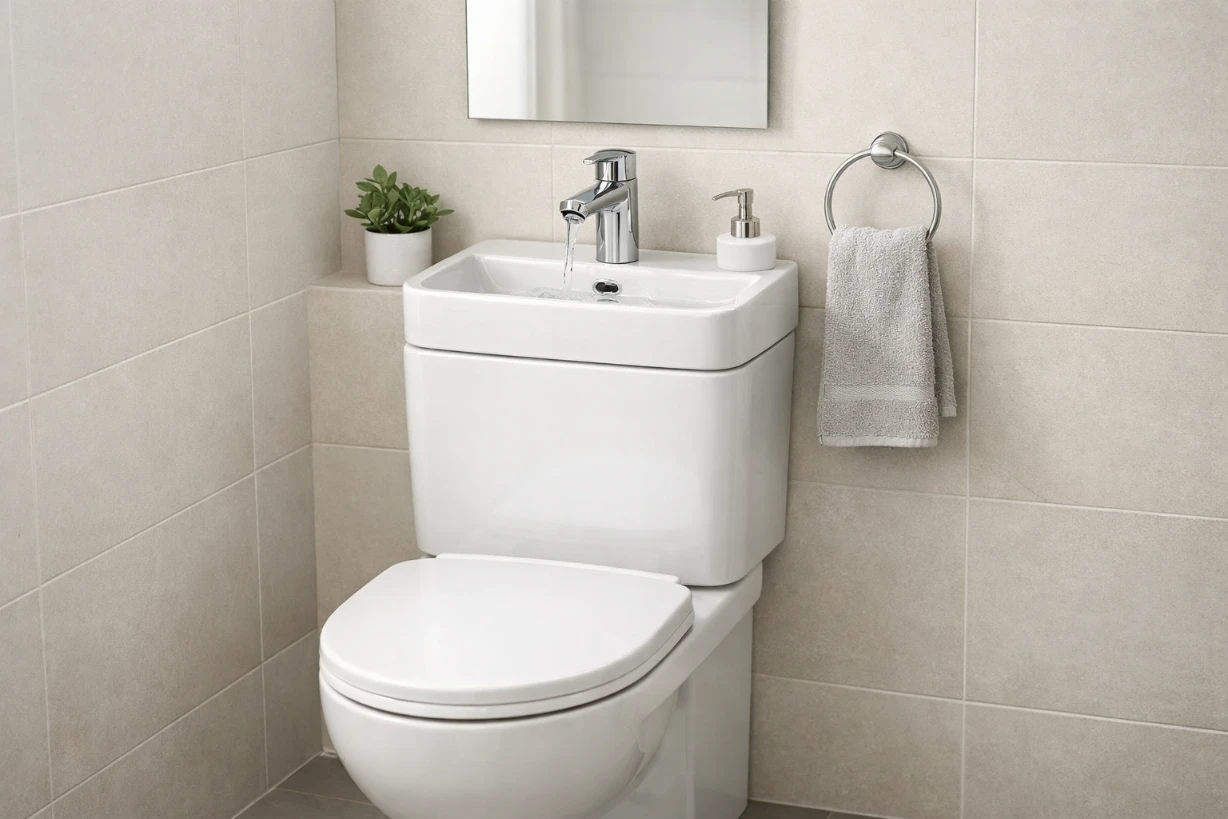
Space at home often feels tight, especially in small bathrooms and tiny cloakrooms. Many of us know the feeling of trying to squeeze a toilet, a sink, a door that actually opens, and maybe even some storage into a room the size of a closet. A space saving cloakroom toilet with sink on top can quietly solve a lot of these problems at once.
What Is a Toilet With Sink On Top?
A toilet with sink on top is a compact unit where the small basin is built right into the top of the toilet cistern. After you flush, clean water runs through the faucet into the sink, then drains into the tank to be used for the next flush. You wash your hands over the tank instead of using a separate wall mounted sink.
This design saves floor space and also uses water in a smarter way. You still get clean water at the faucet, but the water you use for handwashing does not go straight down the drain. It helps refill the cistern instead.
Why Homeowners Choose a Space Saving Cloakroom Toilet With Sink On Top
We see more people choosing this type of unit for guest toilets, under-stair bathrooms, basements, and tiny apartments. It works especially well in homes where the cloakroom is only used for short visits by family or guests.
Common reasons for picking a compact toilet with sink on top include:
- Very small floor area where a normal sink will not fit
- Desire to add a second or third toilet without major building work
- Savings on water bills through reuse of handwashing water
- A cleaner, less cluttered look in tight spaces
- Making use of awkward corners in old houses
For many households, it is a simple way to turn an unused nook into a useful cloakroom or powder room.
How a Toilet With Sink On Top Actually Works
At first glance, this compact toilet can look unusual. But the inner workings are easy to understand once we break them down into steps.
The Flow of Water
Here is what happens when you use a toilet with sink on top:
- You flush the toilet. The cistern empties into the bowl like any normal toilet.
- Fresh, clean water then flows into the small sink faucet set into the top of the tank.
- You wash your hands in the sink. Soap and water run down the small basin drain.
- The used water drops straight into the cistern below, filling it for the next flush.
- Once the tank reaches the set level, the flow stops, just like a standard toilet.
The water you feel on your hands is always fresh from the supply pipe, never from the bowl. The used water is only held in the tank, which is already a part of the flushing system.
Key Parts of the System
Most compact toilets with sink on top include:
A regular toilet bowl, a combined cistern and mini sink, a small faucet or spout built into the top, a drain in the sink linked to the tank, and the standard flush valve and fill valve inside the cistern.
The main difference from a standard toilet is simply that the refill water flows through a visible faucet and sink before it reaches the tank.
Benefits of a Cloakroom Toilet With Sink On Top
When we look closely at these units, several clear benefits stand out. They go beyond saving a few inches of floor space.
1. Big Space Savings in Tiny Rooms
The most obvious win is how much room you gain. A traditional cloakroom often needs enough width for a toilet plus a separate little sink to the side or opposite. That often means cramped knees, a door that hits the basin, or no room for shelves.
With a space saving cloakroom toilet with sink on top, the two main fixtures become one. You free up the wall where a normal sink would have stood. This can make the room feel less tight, even if it is still small.
2. Smarter Use of Water
Water reuse is another strong reason to pick this design. Every time you wash your hands, you are basically pre-filling the cistern with water that would normally go to waste down a drain. The system puts gravity to work with no extra power or electronics.
Over months and years, this can lower the total fresh water used for flushing. In areas with higher water costs or where households care deeply about cutting waste, a toilet with sink on top supports those values in daily life.
3. Extra Hygiene in a Small Footprint
In very tiny cloakrooms, some people skip the sink altogether because there is simply no room. That is not ideal for hygiene, especially with kids or guests coming in from outside.
The compact basin above the cistern gives a clear reminder to wash hands right after using the toilet. Because it sits so close, there is very little movement between flushing and washing, which many homeowners find reassuring.
4. Easier Layout and Less Plumbing Work
Fitting a standard wall hung or pedestal sink often needs extra pipework, supports, and wall finishing. With a toilet and sink combo, the water supply and waste are already in one place. The faucet usually connects to the same supply that fills the cistern.
This can reduce the labor and material cost, especially if you are adding a new cloakroom in an older house where walls are flimsy or floors are uneven.
Best Places To Install a Toilet With Sink On Top
Not every bathroom needs this kind of combo unit, but some areas of the home are perfect for it. We see the strongest fit in the following spaces.
Under-Stair Cloakrooms
The area under a staircase often has a low, sloping ceiling and odd angles. Fitting a full-size sink there can be hard. A toilet with sink on top stays tight against one wall and keeps the floor as open as possible, helping people move in and out without bending too much.
Entryway or Mudroom Toilets
Many homes place a small toilet near the front or back door. These rooms tend to be narrow, and users go in for quick visits. A compact cloakroom toilet makes it easier for guests and children to wash hands without feeling squeezed in by large fixtures.
Small Attic or Loft Bathrooms
When turning lofts and attics into living space, ceiling height and floor area are both limited. A toilet with sink on top can make the difference between fitting a useful half-bath and having to skip it completely.
Rental Units and Studio Apartments
Landlords often look for ways to add extra convenience without major structural work. A space saving cloakroom toilet with sink on top helps create a self-contained bathroom corner in a studio or tiny rental while keeping costs under control.
Key Features To Look For When Buying
The market for these compact toilets has grown, and there are clear differences in quality. When we help homeowners choose, we pay attention to several points.
Size and Shape
Measure the room first. Then check:
- Projection from the wall (how far the toilet sticks out)
- Width at the widest point of the bowl and cistern
- Height of the sink top, especially for children or older users
Some models are round-front to save a few extra inches, while others are more elongated for comfort. Choose what fits both the person and the room.
Sink Depth and Faucet Style
The sink on top is usually small but should still let you wash hands without making a mess. Look for a basin with enough depth to limit splashing. A faucet that points slightly inward also helps keep water inside the bowl.
Some toilet with sink on top designs offer a motion-style flow that starts only when the tank refills, while others allow simple manual control. Think about who will use the cloakroom and how simple it needs to be.
Flush Performance and Water Rating
Flushing power still matters. A compact design should not mean weak performance. Check the flush volume per use and look for dual flush options, where you can choose a smaller flush for liquids and a larger one for solids.
In many areas, water labels show how efficient the toilet is. A water-saving unit combined with a sink-top cistern can cut usage even more.
Installation Basics and Plumbing Considerations
Most space saving cloakroom toilets with sink on top connect much like a standard close coupled toilet. Still, we suggest working with a licensed plumber, especially in older homes.
Water Supply and Drain Position
The water inlet must match or be adaptable to the new unit. In many cases, the same supply can feed both the filling valve and the faucet. The waste outlet needs to line up with the new toilet position, whether it is floor or wall outlet.
If you are shifting the toilet significantly, some extra work will be needed to reroute the pipe. Planning this early avoids surprises once the old fixtures are removed.
Ventilation and Moisture Control
Small cloakrooms can fog up fast. Good ventilation keeps the room dry and safe. If there is no window, an exhaust fan that vents outdoors is often required by local codes.
Even though the sink is small, splashes can still dampen nearby walls. We recommend moisture resistant paint or tiling behind the unit to prevent mold and staining.
Daily Use, Cleaning, and Maintenance
Once installed, a toilet with sink on top is straightforward to live with. The cleaning routine is very close to a normal toilet and small basin.
Cleaning Tips
For the bowl, use your usual toilet cleaner, brush, and disinfectant. For the top sink and faucet, a soft sponge and mild bathroom cleaner usually work well. Avoid harsh scrubbing pads that may scratch the small basin or the top of the cistern.
Pay attention to the faucet spout and sink drain, where soap scum and limescale can gather. Wiping them down once or twice a week keeps the water flow smooth.
Simple Maintenance Checks
Every few months, it helps to:
- Check the faucet for any drips after the tank has filled
- Listen for long refill noises that may signal a worn fill valve
- Look around the base of the toilet for signs of leaks or damp patches
Most issues can be solved with the same spare parts used for regular toilets, such as fill valves, flush valves, or seals. The sink portion rarely needs special parts beyond standard faucet washers or aerators.
Design Ideas To Make the Most of Your Cloakroom
A space saving cloakroom toilet with sink on top gives you a clean main fixture to build around. From there, a few smart choices can make the room feel larger, lighter, and more welcoming.
Color and Lighting
Light color walls, such as soft white, cream, or pale gray, reflect more light and make a small cloakroom feel open. A mirror above or beside the unit can double the light and give a sense of depth.
Overhead lighting often works fine, but adding a small wall light near the mirror helps users see clearly when washing hands.
Storage and Surfaces
Since the sink sits on the cistern, you may lose a bit of flat top space. To replace it, consider:
- A slim shelf above the toilet for spare toilet paper and small decor
- A narrow recessed cabinet if the wall depth allows
- Hooks or rails for towels mounted away from the splash zone
Keeping clutter off the tiny sink and edges makes cleaning easier and keeps the room feeling tidy.
Common Questions About Toilets With Sink On Top
Is the water in a toilet with sink on top clean for handwashing?
Yes. The water that comes from the faucet is straight from the fresh supply, just like any other sink. Only after you use it does it drop into the cistern to be used for the next flush. You never wash with water from the bowl.
Does a toilet with sink on top smell different from a regular toilet?
No. The design still uses a sealed tank and a water trap in the bowl, just like a normal toilet. If you notice odors, they are usually due to normal bathroom issues such as poor ventilation or lack of cleaning, not the sink-on-top feature itself.
Can a toilet with sink on top replace a standard toilet in any bathroom?
In many cases, yes. As long as the waste outlet and water supply can connect correctly, you can swap a regular toilet for a compact cloakroom toilet with sink on top. Still, we advise checking measurements and talking with a plumber to confirm fit and compliance with local rules.
How much space can I really save with a sink-on-top toilet?
The exact number depends on the old fixtures, but you usually save the full depth and width of a separate small sink. In very narrow rooms, this can be the difference between squeezing sideways past a basin and walking in comfortably.
Is a toilet with sink on top good for kids and older adults?
Yes, if you choose the right height and a stable, easy-to-reach faucet. Children often find it fun and simple to wash hands right above the toilet. For older adults, less movement between toilet and sink can be helpful, as long as there is still safe space for standing and turning.
Do these toilets meet plumbing codes in the United States?
Many models are built to standard codes, but rules vary by state and city. When planning a new cloakroom toilet with sink on top, it is wise to check with your local building department or a licensed plumber to be sure the model you choose is approved in your area.
Is the water saving from a toilet with sink on top really noticeable?
Over time, yes. Every handwash that would normally use extra sink water now helps refill the cistern. The savings are greater in homes where the cloakroom sees frequent use, such as families with children or houses that host guests often.
A well-chosen space saving cloakroom toilet with sink on top brings practicality, comfort, and gentle water savings into even the smallest corner of the home, turning tight spaces into useful, hygienic rooms everyone can share.