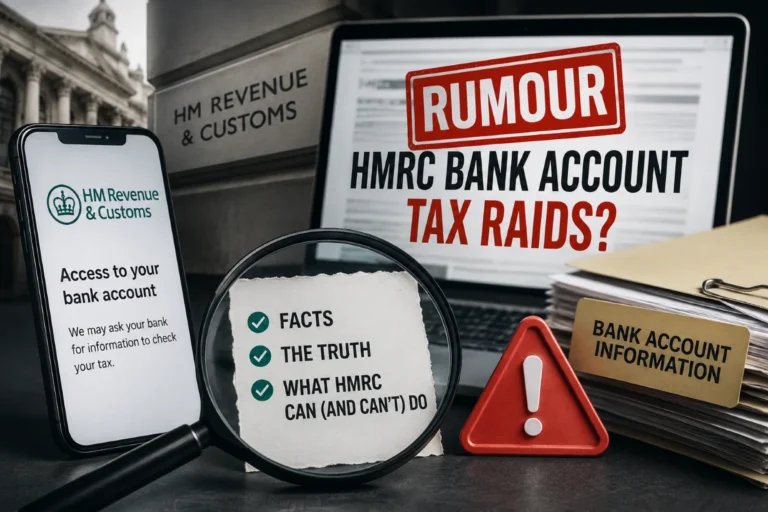
The phrase “hmrc bank account tax raids” has spread fear and anger across social media and online forums. Many people now worry that HM Revenue & Customs can simply dip into any UK bank account, take money without warning, and leave families unable to pay rent or buy food. We want to look at what is true, what is rumor, and what steps you can take to protect yourself and your savings.
Where did the hmrc bank account tax raids rumors come from?
Most of the hmrc bank account tax raids stories come from a mix of real powers, old news, and a lot of guesswork. Over the last decade, HMRC has gained stronger tools to collect unpaid tax. News headlines about “tax raids on bank accounts” made the situation sound more dramatic than it often is.
At the same time, people share personal stories online. Some are accurate, some are half-right, and some miss key facts. A man who ignores letters for years, loses an appeal, and then has money taken from his account might later say, “HMRC raided my bank out of the blue.” The missing details can turn a real legal process into a scary myth.
To understand the truth behind hmrc bank account tax raids, we need to look calmly at the legal powers HMRC actually has, how those powers are used, and what rights you have if you ever find yourself in their sights.
Can HMRC really take money directly from your bank account?
HMRC can sometimes take money directly from a bank account, but only in specific situations and under strict rules. This is one of the roots of the hmrc bank account tax raids headlines. The legal name for this is “direct recovery of debts.” It is not used for small mistakes or simple late payments. It is aimed at people who have known tax debts and refuse to deal with them.
For example, HMRC might use this power if:
- You have a clear, confirmed tax debt that has been due for a while.
- HMRC has sent many letters and tried to contact you.
- You have ignored payment plans, calls, and warnings.
- You have enough money in your accounts to pay, or at least to pay part of it.
Even then, there are legal steps and protections. HMRC cannot just log into your account like an online thief and move money in the night. The image of random hmrc bank account tax raids on innocent people is not how the system works in practice.
What legal powers does HMRC have over bank accounts?
The powers that feed the hmrc bank account tax raids stories usually fall into three areas: direct recovery of debts, third-party information notices, and freezing or seizing assets through the courts.
Direct recovery of debts (DRD)
Direct recovery of debts lets HMRC take money from bank and building society accounts to settle unpaid tax once it has become a confirmed debt. But there are conditions:
HMRC must normally:
- Check that at least a set minimum amount of debt is owed.
- Leave a minimum level of funds in your account so you are not left with nothing.
- Send you a detailed notice in advance, showing how they reached the figure.
- Give you time to challenge the action or set up a payment plan.
This is a legal process. It leaves a paper trail. It is not like a secret raid where you only find out after the money is gone. If you reply to letters and call HMRC when problems start, you are very unlikely to end up on the sharp end of these powers.
Court orders and charging orders
For larger or complex debts, HMRC may ask a court for permission to enforce payment. That can include:
Freezing a bank account for a short time.
Getting a charging order over property, such as your home.
Sending in enforcement officers to seize goods if other routes fail.
These steps involve judges, legal paperwork, and the right to be heard. They are serious and stressful, but they are far from surprise hmrc bank account tax raids against people who did nothing wrong.
Information requests to banks
HMRC can also ask banks for information about customers, such as statements and account details. This helps them check if tax returns match real income and savings. While some people describe this as “raiding” a bank, it is actually an information tool, not a direct grab for money.
Again, there are rules. Banks must follow data protection laws. HMRC must have a tax reason to ask. They cannot simply explore random accounts for fun or curiosity. Data access is controlled and can be challenged in some cases.
What is rumor and what is fact about hmrc bank account tax raids?
Let us break down a few common claims around hmrc bank account tax raids and test them against reality.
Claim 1: HMRC can take money from any account at any time without warning
This claim is false. HMRC needs a legal basis. For direct recovery of debts, there must be a confirmed tax debt, notices, and a chance for you to respond. For court-based actions, judges and legal rules stand in the way of random behavior.
While some people say they had “no warning,” that often means they did not open letters, threw them away, or moved house without updating their address. Official warnings may have gone unanswered for months or years.
Claim 2: HMRC can raid accounts of people who have done nothing wrong
HMRC focuses on those it believes owe tax. Mistakes do happen in any large system, but random hmrc bank account tax raids on totally innocent people are extremely rare. When errors are found, HMRC usually has to repay the money and may add interest.
If you file your returns, reply to letters, and keep records, the risk of being wrongly targeted is low. You are more likely to get a routine query or check than a direct grab at your account.
Claim 3: HMRC can empty your bank account and leave you with no money
Under current rules, HMRC must leave a basic minimum balance in your account when using direct recovery of debts. This is meant to cover living costs. The exact figures can change over time with policy updates, but the principle is that they cannot drain your accounts to zero using this power.
Courts also consider your ability to live and work when approving enforcement measures. While heavy-handed cases appear in the news, they are usually the end of a long story of non-cooperation.
How social media magnifies fear about HMRC and banks
Why do hmrc bank account tax raids rumors feel so real to many people? One reason is how stories spread online. A dramatic tweet or video goes viral. People share screenshots without context. An angry comment like “HMRC stole my money today” gets attention, but the slow build-up of letters, warnings, and chances to pay rarely makes it into the post.
We also bring our own worries to these stories. If we have had money troubles, debt collectors, or bank fees in the past, tales of hmrc bank account tax raids tap into old stress. That fear can make rumors sound true even when the facts are thin.
It helps to pause and ask:
- Who is telling this story and what details are missing?
- Is there a court case, news report, or official source to back it up?
- Could this be a rare extreme case, not the normal experience?
Calm checking can take some heat out of the scariest claims and help you see the real risks more clearly.
What rights do you have if HMRC targets your bank account?
If HMRC starts action that feels like one of the dreaded hmrc bank account tax raids, you are not powerless. You have rights, and you also have options to fix the problem early.
The right to clear information
HMRC must tell you:
- How much they say you owe and for which years.
- How they calculated the figure.
- What legal powers they are using.
- What steps you can take if you disagree.
Letters from HMRC can be hard to read, but you are allowed to ask for a clearer explanation. You can write back, call, or ask a tax adviser to help you understand.
The right to challenge or appeal
If you think HMRC is wrong, you can often appeal. The rules depend on the type of tax and the stage of the process, but it may include:
Asking HMRC to review the decision again.
Appealing to an independent tax tribunal.
Complaining about how HMRC staff have handled your case.
Time limits are strict, so do not wait. The feeling of hmrc bank account tax raids often comes from people staying silent until things have gone very far. Even a simple letter saying, “I do not agree with this, please explain” can slow the process and give you space to get advice.
How to reduce the risk of HMRC action on your bank account
No one wants to be anywhere near the reality behind hmrc bank account tax raids. While you cannot control every mistake or misunderstanding, there are clear steps you can take to lower the risk.
File returns on time, even if you cannot pay in full
HMRC treats people who file honest returns and explain their money troubles much better than those who ignore the system. If you cannot pay, you can often set up a “time to pay” plan and spread the cost over months or longer.
Open and read every letter from HMRC
Many serious problems start because someone is scared of opening brown envelopes. We understand the feeling. But leaving letters unanswered can turn a small issue into one that looks like hmrc bank account tax raids territory.
If you feel overwhelmed, ask a trusted friend, family member, or adviser to open and read them with you. Sometimes just sharing the burden makes it feel more manageable.
Keep proof and records
Keep:
- Payslips and P60s.
- Bank statements.
- Invoices and receipts if you are self-employed.
- Copies of all letters you send to HMRC.
Good records can quickly clear up many disputes. They can also give you confidence when you feel unfairly treated.
Seek help early
Charities, tax advisers, and debt advice groups handle hmrc bank account tax raids fears every week. They know which letters truly signal danger and which are routine. They can help you write replies, set up payment plans, and challenge mistakes.
Asking for help is not a sign of failure. Tax rules are complex, and many working people, business owners, and pensioners struggle with them at some point in life.
Are HMRC powers likely to grow stronger in future?
Another worry linked to hmrc bank account tax raids rumors is that powers will keep growing until no one is safe. In reality, any major new power usually goes through public debate, parliamentary scrutiny, and sometimes strong pushback from the media and professional bodies.
Governments want to collect tax but also need public trust. If HMRC was seen to act like a rogue force that can empty accounts without reason, confidence in the whole tax system would break. That would be bad for everyone, including the government itself.
We can expect ongoing pressure to crack down on serious tax evasion and hidden offshore accounts. But for most people, the bigger risk is not secret hmrc bank account tax raids. It is missed letters, poor communication, and small problems left to grow for too long.
When the fear feels personal
For some readers, hmrc bank account tax raids stories touch a nerve because money is already tight. Maybe you are behind on bills, or your business is struggling. The idea that someone else might help themselves to your account without your consent feels like the final straw.
Acknowledge that fear. It is real, and it affects sleep, health, and family life. But also remember that power over your money is not one-sided. You can:
Talk to creditors and arrange plans.
Ask for independent advice before things reach a crisis.
Contact HMRC yourself rather than waiting for them to call you.
Each small step makes the worst-case hmrc bank account tax raids story less likely to come true in your own life.
Key takeaways: the real truth behind hmrc bank account tax raids
The phrase “hmrc bank account tax raids” sounds like something from a crime drama. The real picture is more boring but also more hopeful. HMRC does have serious powers, including direct recovery of debts and court-backed enforcement. These powers can reach bank accounts in some cases.
However, they are normally used after long periods of contact and warning. They are aimed at unpaid, confirmed tax debts, not random members of the public. There are legal safeguards, appeal routes, and basic protections for living costs. Most people who stay engaged with HMRC, file honestly, and ask for help when needed will never go through anything close to the nightmare stories shared online.
If you remember one thing, let it be this: silence and avoidance are what turn tax problems into something that feels like hmrc bank account tax raids. Conversation, honesty, and early action are what keep you in control.
Frequently asked questions about hmrc bank account tax raids
Can HMRC check my bank account without telling me?
HMRC can ask banks for information about your accounts, usually without telling you first. They use these powers to match income, interest, and savings with your tax returns. This is not the same as hmrc bank account tax raids, because they are looking at data, not taking money. If they later think tax is owed, they still need to follow legal steps to collect it.
Can HMRC freeze my bank account?
HMRC can sometimes ask a court to freeze funds or apply other restrictions, often in serious or high-value cases, such as suspected fraud or large unpaid tax bills. This is not routine. Courts expect HMRC to justify why such a strong step is needed. Again, this is closer to formal enforcement than to surprise hmrc bank account tax raids on ordinary taxpayers.
How much money can HMRC take from my bank account?
When using direct recovery of debts, HMRC must leave a minimum amount in your account. They can only take what is needed to cover the confirmed debt, up to the available balance above that protected minimum. The exact amounts can change over time, but they cannot simply sweep every last penny. If you feel they have taken too much, you can challenge the decision.
Will HMRC tell me before taking money from my bank?
Yes. Before anything that looks like hmrc bank account tax raids, HMRC should send formal notices, warning letters, and details of the debt. You should have a chance to respond, set up a payment plan, or dispute the amount. If you never see these letters, check that HMRC has your correct address and that your post is being delivered safely.
What should I do if HMRC says I owe tax I cannot afford to pay?
Contact HMRC as soon as you can. Ask about a “time to pay” agreement, which lets you spread the amount over months or longer. Be honest about your income and spending. Also consider speaking to a debt advice charity or tax adviser. Acting early can keep things far away from any real risk of hmrc bank account tax raids on your savings.
Can HMRC take money from my joint bank account?
Yes, in some cases HMRC can seek money from joint accounts if one account holder owes tax, but they must consider the rights of the other person on the account. This area can be complex and may need legal or professional advice. If you see hmrc bank account tax raids claims involving joint accounts, remember that each case depends on its own facts and the evidence of who owns what share of the money.
How long can HMRC chase me for unpaid tax?
Time limits depend on why the tax was unpaid. For simple mistakes, HMRC usually has up to four years. For careless behavior, it can be up to six years. For deliberate evasion, it can be much longer. The longer a debt sits, the more chance it has of turning into serious enforcement. Dealing with problems early is one of the best ways to avoid harsh collection actions that feel like hmrc bank account tax raids.