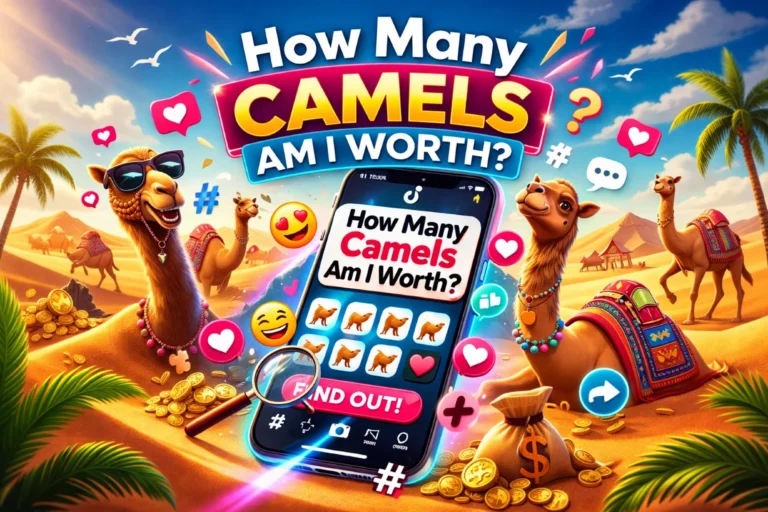
How many camels am I worth. That sounds like a joke, but if you have been on TikTok or Instagram lately, you have probably seen people using camel calculators, filters, or quizzes to rate their looks or their “value.” It feels silly and playful, but it also raises real questions about beauty standards, culture, and respect.
We will walk through where this trend comes from, how the “how many camels am i worth” games work, why they went viral, and how to take part without crossing lines. Our goal is to give you a clear, honest guide so you can enjoy the fun parts and avoid the harmful ones.
What Is The “How Many Camels Am I Worth” Trend?
The “how many camels am i worth” trend is a social media game where a website, filter, or quiz assigns a number of camels to a person based on their looks or profile details. People often post the result with a funny caption or share it with friends for laughs.
In many videos, someone enters basic info like hair color, eye color, age, and height. The tool then spits out a number, such as “You are worth 57 camels.” On TikTok, users then react with shock, pride, or mock anger. Others compare results with partners or friends.
At first, it seems harmless. It is just a random number on a screen. But the idea behind it comes from older stereotypes about buying brides with camels. That history makes this trend more than just a silly rating game.
Where Did The Camel Calculator Idea Come From?
The question “how many camels am i worth” comes from long-standing Western jokes about Middle Eastern and North African cultures. Movies, cartoons, and even travel stories have often exaggerated or mocked the idea of men “paying” for wives with animals or gold.
In some rural or traditional communities around the world, bride price or dowry systems still exist in different forms. These systems are complex and tied to local customs, family agreements, and social rules. They are not simple “trades” the way memes make them look.
Over time, websites started using the camel concept as a joke calculator. Early camel calculator sites asked for traits like:
- Hair color and length
- Eye color
- Age and height
- Country or region
They would then show a big bold number and sometimes a silly message. Social media picked it up, and suddenly people from all over the world were asking: how many camels am I worth, and how many camels is my boyfriend or girlfriend worth.
How Do Camel Worth Calculators And Filters Work?
Most “how many camels am i worth” tools are simple. They do not use real AI or deep analysis. They are usually coded with fixed values for different traits. Each trait gets a number, and the site or filter just adds them up.
For example (this is just a made-up example, not a real formula):
- Age between 18 and 25: 20 camels
- Long hair: 10 camels
- Blue or green eyes: 15 camels
- From a specific country: 5 camels
The result feels “personal,” but the system is basic and biased. It reflects what the creator thinks people see as attractive or valuable, not any objective truth. Many tools also rank people by Western beauty standards, which can make others feel less seen or less valued.
Why Did The Camel Worth Trend Go Viral On TikTok?
On TikTok, trends spread fast when they are easy, funny, and a bit shocking. The “how many camels am i worth” challenge checks all those boxes.
People enjoy it because:
- It turns beauty and self-worth into a game.
- Reactions are fun to watch, especially couples comparing scores.
- The numbers are random enough to surprise people.
- It taps into curiosity: we all wonder how others see us.
Creators also use this trend to build engagement. Asking viewers to guess “how many camels am i worth” before showing the result makes people comment and share. That pushes the video higher in the algorithm, which brings in more views and more copies of the trend.
Is The “How Many Camels Am I Worth” Trend Offensive?
This is where things get serious. For some viewers, the camel calculator is just goofy fun. But for others, it feels like a joke built on real pain.
There are three main problems with the “how many camels am i worth” trend:
1. It Can Objectify People
The whole idea of putting a price on a person, even as a joke, turns them into an object. Women are usually the focus, though men also use the trend. Over time, repeatedly seeing yourself rated, ranked, and “priced” can harm self-esteem.
We live in a world where people already feel pressure to look perfect on camera. When a silly camel calculator tells someone they are “worth fewer camels” than their friends, some will laugh it off. Others might quietly compare and feel less good about their looks.
2. It Can Stereotype Cultures
For people from Middle Eastern, North African, or other regions linked to camel jokes, this trend can feel tired and lazy. It reduces rich, complex cultures to one cartoon image: the “camel-trading husband buying a wife.”
Many young people from these cultures are online, watching their homes turned into memes. When they see “how many camels am i worth” jokes over and over, it can feel like their identity exists only as a punchline.
3. It Can Make Light Of Forced Or Unequal Marriages
In some parts of the world, people really do face forced marriages, child marriages, or economic pressure to marry against their will. While camel calculators do not cause that harm, they echo the idea that a person’s life can be traded like property.
For survivors of control or abuse, these jokes can stir up painful memories. What feels like harmless humor to one person might feel like mockery of real suffering to another.
How To Take Part In The Trend Without Being Harmful
It is possible to join the “how many camels am i worth” trend with more care. If you decide to make or share content around this idea, consider a few simple steps.
Set Your Own Tone
Make it clear you see the trend as a joke, not a real measure of worth. You can say in your caption that everyone has equal value and that you are just playing with a silly filter. A single line can shift how people read your video.
Avoid Stereotypical Costumes Or Accents
Some users dress up in fake “Arab” outfits, put on accents, or play desert music in the background. That kind of extra layer can turn a goofy quiz into cultural mockery. Sticking to your normal style is usually safer and more respectful.
Focus On Self-Love Instead Of Looks
You can flip the trend. Instead of asking “how many camels am I worth based on my looks,” you can list your skills, values, and personal wins.
For example, you might say: “I am worth 1,000 camels because I am kind, loyal, funny, and I make the best pancakes.” This twist can remind people that true worth goes far beyond appearance.
Be Ready To Listen If Someone Feels Hurt
If a viewer from a region linked to camel jokes comments that your video feels offensive, try listening before reacting. You can ask them to share more, and you can decide to adjust future content. Listening is not weakness. It is how online spaces become safer and kinder.
What Does It Say About How We See Our Own Worth?
The reason “how many camels am i worth” feels catchy is simple: many of us already feel like our value is measured in numbers. We see:
- Follower counts and likes
- Test scores and grades
- Calories, pounds, or inches
- Salaries and net worth charts
The camel number adds one more layer to that idea. It makes a joke out of something many people already worry about in private: “Am I pretty enough? Am I wanted? Would someone pick me?”
Instead of ignoring those feelings, we can use the trend as a mirror. When we stop and ask why “how many camels am I worth” feels so tempting, we start to see how deeply we link identity to external ratings.
How Parents And Teachers Can Talk About This Trend
If you are a parent, teacher, or older sibling, you may have seen kids or teens playing with camel calculators without understanding the background. This can be a chance to open honest, age-appropriate talks about respect and culture.
Some gentle ways to start the talk:
Ask what they like about the trend. Let them explain first. Then you might say:
“Some people from certain countries feel hurt by the camel joke, because it makes their culture look bad or simple. How would you feel if people joked like that about our culture all the time?”
You can also share that no person’s worth can be counted in camels, dollars, likes, or grades. The more kids hear that from adults they trust, the less power silly calculators will have over their self-image.
Healthy Alternatives To Beauty Rating Games
If you enjoy light-hearted online quizzes but want less risk of harm, there are many other choices that stay fun without reducing people to property.
Some ideas include:
- Personality quizzes about hobbies, music, or food.
- Filters that show what animal, color, or season fits your vibe.
- Challenges that ask you to share three things you like about yourself that are not about looks.
- Games that rate baking skills, drawing skills, or gaming skills instead of faces.
These still give the fun of “What am I” and “How do people see me” without the baggage of “how many camels am i worth” and all the history that phrase carries.
How To Respond If Someone Asks “How Many Camels Am I Worth?”
You might have a friend or partner who asks you, half-joking, “So, how many camels am I worth?” It can be a sweet chance to show care and humor at the same time.
You could respond with something like:
“You are priceless. No camel count could ever cover you.”
Or a playful line:
“All the camels, plus every star in the sky, and it still would not be enough.”
These answers keep the fun but shift the focus back to real affection and respect. They remind the other person that they are more than a number on a fake market.
Final Thoughts On The Camel Worth Trend
The “how many camels am i worth” trend sits at a strange crossroads of humor, culture, and self-worth. On the surface, it is just another social media game. Underneath, it echoes old stereotypes and modern pressures to rate ourselves like products.
We do not need to fear every meme. But we do need to stay awake to what our jokes carry. When we pause and think about where a trend comes from and who it might hurt, we use the internet with more wisdom and more heart.
In the end, no calculator, filter, or quiz can tell you your true worth. Not in camels, not in dollars, not in likes. You are worth more than any number, and that is the one “how many camels am i worth” answer that will always be right.
FAQs
Is the “how many camels am I worth” test real in any culture?
No. The online “how many camels am i worth” tests and filters are not real cultural tools. They are made-up games that borrow old stereotypes about bride price and camels. Real cultural marriage customs are far more complex than these quizzes suggest.
Are camel calculators accurate or based on real data?
Camel calculators are not accurate in any serious way. They use simple formulas and the creator’s personal ideas about beauty or value. The numbers they show are random and should never be used to judge yourself or others.
Is it racist or disrespectful to use camel worth filters?
It can be, depending on how it is done. Using the “how many camels am i worth” idea while mocking Middle Eastern or African cultures, using fake accents, or dressing in costumes can easily slide into racism or cultural disrespect. Sticking to a neutral, light tone and avoiding stereotypes is safer.
Why do people still enjoy the “how many camels am I worth” trend?
People enjoy it because it is quick, surprising, and easy to share. It also plays on natural curiosity about how others might rate our looks or personality. Many users see it as harmless fun, though they may not think about the deeper issues behind it.
How can I tell my friends I am not comfortable with camel worth jokes?
You can be honest but calm. You might say, “I know it is meant as a joke, but the whole ‘how many camels am i worth’ thing makes me uncomfortable. It feels like putting a price on people and stereotyping some cultures. Can we skip that trend and try another one?” Real friends will usually respect that.
What can I do if a camel worth video makes me feel bad about my looks?
First, remind yourself the result is random and not based on truth. Then consider taking a break from rating games, muting those filters, or curating your feed toward content that makes you feel strong and valued. Talking to a trusted friend or adult about your feelings can also help.
Are there safer trends than “how many camels am I worth” to try instead?
Yes. You can look for trends that focus on talents, humor, or creativity rather than looks or “worth.” Dance challenges, art prompts, cooking videos, “day in my life” clips, and wholesome Q&A trends all offer fun without turning people into numbers or property.