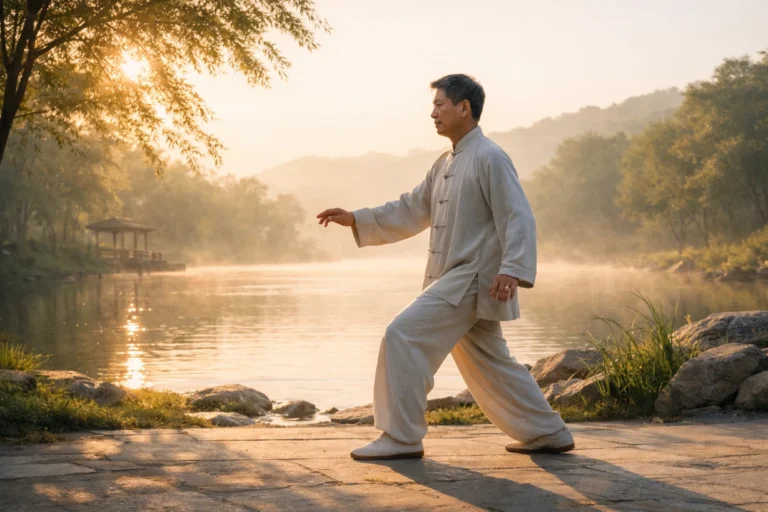
Tai chi walking is a simple, slow, and mindful way of moving that comes from the art of tai chi. When people ask what is tai chi walking, they usually want to know two things at the same time. They want to know what it is, and how they can do it in daily life without long or hard training. Tai chi walking lets us turn each step into a small moving meditation. It is gentle on the body, it calms the mind, and it trains balance with every shift of weight.
What Is Tai Chi Walking In Simple Words
To answer what is tai chi walking in plain language, we can say this. It is walking very slowly while paying full attention to each step, moving the body with soft, smooth motions, the way we do in tai chi forms.
Instead of moving fast and thinking of other things, we place one foot after the other with care. The weight moves from one leg to the other like a slow wave. The upper body stays relaxed, the breath is calm, and the mind stays in the present moment.
Tai chi walking is different from normal walking in three main ways. It is slower, it is more controlled, and every part of the body works together in one gentle flow. This simple change turns walking into a practice for balance, focus, and inner peace.
Roots Of Tai Chi Walking In Traditional Practice
When we look deeper at what is tai chi walking, we see that it comes from traditional tai chi training. In many old schools, teachers used walking drills to help students learn correct posture, rooting, and weight shifting before they tried longer forms.
Students would repeat forward and backward tai chi walking in long lines. This gave them time to understand how to place the foot, how to bend the knee safely, and how to keep the spine straight. The slow steps also trained the legs and hips without sudden strain.
Over time, many teachers began to share tai chi walking on its own as a practice. It is easier to learn than full tai chi forms, and it fits well into daily life. These days, people use it as a bridge between simple mindful walking and full tai chi routines.
Core Principles Behind Tai Chi Walking
To really know what is tai chi walking, we need to look at the key ideas that guide it. These simple rules help us turn slow steps into a deep health practice.
1. Relaxed, Upright Posture
We stand tall but not stiff. The head floats gently upward, as if a string lifts the crown. The chin is slightly tucked, the shoulders are loose, and the chest is soft, not pushed out. The lower back is relaxed and the tailbone drops slightly down toward the floor or ground.
This posture lets the body feel light on top and stable below. It reduces strain on the neck and lower back and sets a safe base before we start to move.
2. Rooting Into The Ground
In tai chi, rooting means feeling a steady connection with the earth under us. During tai chi walking, each time we shift weight onto one leg, we picture that leg as a strong tree trunk. The foot spreads softly on the ground, not gripping, but pressing with gentle firmness.
This rooting feeling helps prevent falls, especially for older adults. It also gives a sense of safety and calm to the nervous system, because the body knows it is supported.
3. Slow, Smooth Weight Shifting
The heart of what is tai chi walking is how we move our weight from one leg to the other. We do not bounce or sway. Instead, the body glides. We feel the weight move through the center of the body, as if we are pouring water slowly from one glass into another.
Slow weight shift builds strength in the legs and trains the brain to control balance with fine detail. It is also one of the main reasons tai chi walking is so gentle for people with joint pain.
4. Coordinated Breath And Mind
During tai chi walking, we breathe through the nose in a slow, quiet way. Some people like to breathe in while stepping forward and breathe out while settling weight on the front foot. Others simply keep breath easy and steady.
The mind follows each step. We feel the heel touch, the sole roll, the toes press, and the weight settle. This full attention is what turns tai chi walking into moving meditation, not just slow exercise.
How To Prepare Before You Start Tai Chi Walking
Before we go into step by step details of how to do tai chi walking, it helps to prepare the body and space. This keeps the practice safe and comfortable.
Choose a flat and open area. A quiet hallway, a garden path, or an empty room all work well. The floor should not be slippery. Wear comfortable clothes that let you move freely. Soft, flat shoes or bare feet on a safe surface are usually best.
Stand still for a moment before you start. Let your arms hang at your sides. Feel the weight in both feet. Take three slow breaths and allow your shoulders, jaw, and stomach to relax. This short pause tells the mind that we are entering a different, calmer way of moving.
Step By Step Guide: How To Do Basic Tai Chi Walking
Many people who search what is tai chi walking also want very clear instructions. The steps below describe a safe, simple version that works for most healthy adults. If you have serious health issues, joint surgery, or balance problems, check with a health professional before trying it, and stand near a wall or sturdy chair.
Step 1: Find A Stable Starting Stance
Stand with your feet about hip width apart. Knees are soft, not locked. Let your weight rest evenly on both feet. Picture your feet spreading into the floor.
Lift the crown of your head gently, relax the face, and let the arms hang with a small bend in the elbows. This is your base stance. Feel calm for a few breaths here.
Step 2: Shift Weight To One Leg
Slowly move your weight to your right leg. Do not tilt the body. Imagine your center of mass sliding over the right foot. The left foot grows lighter, but still touches the ground.
Check that the right knee is bent slightly and stays above the foot, not pushed far forward. You should be able to lift the left foot at any moment without losing balance.
Step 3: Lift And Place The Empty Foot
Now lift the left heel first, then the sole, keeping the toes last to leave the floor. The left knee bends and lifts just a little. There is no kicking or high step.
Move the left foot forward in the air and place the heel down gently in front of you. Place it on the same line as your left hip, not crossing in front of your right foot. The toes point forward or very slightly out.
Step 4: Roll The Foot And Shift The Weight
With the left heel now touching the ground, pause a moment. Then roll the foot from heel to sole to toes. As the foot rolls, your weight slowly pours from the right leg into the left leg.
At the end of the shift, most of your weight is on the front (left) leg. The back (right) heel may be slightly light, but still on the ground. Keep your upper body upright, not leaning forward.
Step 5: Bring The Back Foot Forward
Now the right leg is empty and ready to move. Lift the right heel, then the sole, keeping the toes light for a moment. Step the right foot forward, place the heel down, and repeat the same slow roll and weight shift.
This pattern continues as you walk in a straight line. Step with the heel, roll the foot, shift the weight, then move the back foot.
Step 6: Coordinate Breath And Pace
Move at a pace that fits your breath. You might breathe in while lifting and placing the foot, and breathe out while shifting the weight and settling on the front leg. Or you can take one breath for a full step cycle. The key is that breath stays smooth and never feels forced.
If your mind wanders, gently bring your focus back to the feeling of your feet, your legs, and your breath. This quiet focus is a big part of what is tai chi walking in practice.
Common Mistakes And How To Correct Them
Even though the movements are simple, a few common habits can reduce the benefits of tai chi walking. Being aware of these makes the learning curve smoother.
Leaning The Upper Body
Some people lean forward when stepping, as if trying to reach with the head. Others lean back out of fear of falling. Both put strain on the lower back and knees.
Correction: Imagine your spine as a tall, light pillar that moves straight ahead, not tipping. If you need, practice near a wall and keep the top of your head gently feeling like it is drawn upward.
Stepping Too Long Or Too Short
Very long steps can pull the body off balance and overwork the knees. Very tiny steps can make the body feel cramped and stiff.
Correction: Aim for a natural step, a bit shorter than your normal walking distance. You should feel stable enough to pause at any point without wobbling.
Locked Knees
Stiff, locked knees block the smooth flow of weight from one leg to the other and increase impact on the joints.
Correction: Keep a gentle bend in both knees at all times. Think of them as springs, not steel rods.
Rushing The Practice
Many people start slow, then speed up without noticing. The mind slips back into normal walking habits.
Correction: From time to time, pause after a step and check your breathing and posture. You can even count silently during each shift to keep the tempo slow and steady.
Benefits Of Tai Chi Walking For Body And Mind
When people first ask what is tai chi walking, they often also ask whether it is worth the time. Research on tai chi in general, and walking drills in particular, shows many practical gains, especially for older adults and those with stress.
Physical Benefits
Tai chi walking can support the body in several ways, such as:
- Better balance and lower risk of falls, thanks to slow weight shifts and strong leg muscles.
- Gentle strength building in the thighs, hips, and ankles without heavy impact.
- Improved joint comfort and flexibility, especially in the knees and hips, when movements stay within a safe range.
- More efficient posture, which may ease strain on the neck, shoulders, and lower back.
Because the pace is slow and the moves are smooth, many people with mild arthritis or joint stiffness find tai chi walking more comfortable than fast walking or jogging.
Mental And Emotional Benefits
What is tai chi walking for the mind? It is a way to give the brain one gentle task at a time. The nervous system gets a clear, soft rhythm to follow: step, breathe, feel.
Over time, this can lead to:
- Lower stress levels, as the body shifts from fight-or-flight mode into a calmer state.
- Better focus, because we train ourselves to stay with one action instead of chasing many thoughts.
- A sense of grounded calm, especially for people who feel restless or anxious.
Many people say that after 10 or 15 minutes of tai chi walking, they feel more peaceful, as if their mind had a short vacation from constant noise.
Ways To Add Tai Chi Walking Into Daily Life
We do not need a long block of free time to practice. Once we know what is tai chi walking and feel safe doing it, we can slip short sessions into daily routines.
Here are a few gentle ideas:
- Use tai chi walking for 5 minutes before breakfast to wake up the body gradually.
- Practice a few slow steps in a hallway at work during a break, to clear the head.
- Walk in tai chi style from the living room to the kitchen or from the car to the front door.
- End a normal walk in the park with five minutes of tai chi walking to cool down.
These small pockets of practice add up. Over weeks and months, they help the body remember good posture and calm movement even during normal walking.
Safety Tips And Modifications
For most people, tai chi walking is safe and gentle. Still, it is good to respect your own limits, especially if you have health conditions.
If you have trouble with balance, practice near a wall, railing, or sturdy chair so you can grab support if needed. Keep steps short and avoid turning quickly. If knee pain appears, reduce how much you bend the knees and shorten your stride.
Those with heart or lung issues should keep the pace very easy and stop to rest if breathing feels tight or if chest discomfort appears. In such cases, a doctor’s advice can guide how far to go.
The key is to feel steady and relaxed during and after practice. Tai chi walking should leave you feeling softly warmed and calm, not exhausted or in pain.
From Tai Chi Walking To Full Tai Chi Practice
For some people, learning what is tai chi walking is the first step to a deeper journey. The skills trained here posture, rooting, weight shifting, breath, and attention form the base of most tai chi forms.
If you enjoy the feeling of tai chi walking, you might later join a group class or follow a trusted teacher online to learn full standing forms or seated versions. The body will already know many core ideas, making that next step easier and safer.
Still, tai chi walking by itself is a complete, meaningful practice. Even if you never move on to longer forms, these quiet steps can support your health and peace of mind for many years.
Frequently Asked Questions About Tai Chi Walking
Is tai chi walking good for beginners with no exercise habit?
Yes. Tai chi walking is one of the most beginner friendly parts of tai chi. The moves are simple, the pace is slow, and you can start with just a few minutes. Many people who have not exercised in years find it a kind way to return to movement.
How often should I practice tai chi walking to see results?
For most adults, 10 to 20 minutes, three to five times a week, is a good starting point. Some benefits, such as a sense of calm, may show up right away. Changes in balance and leg strength usually appear over several weeks of steady practice.
Can I do tai chi walking if I have bad knees?
Many people with mild knee pain can practice safely, as long as steps stay small and knees do not bend deeply or twist. It helps to keep the knee in line with the toes and move within a pain free range. If you have had knee surgery or severe arthritis, ask your doctor or physical therapist before trying tai chi walking.
What is tai chi walking compared to normal walking for fitness?
Normal walking is usually faster and raises the heart rate more, which helps with cardiovascular fitness. Tai chi walking is slower and focuses more on balance, posture, joint comfort, and mental calm. Many people choose to do both, using normal walking for aerobic exercise and tai chi walking for balance and stress relief.
Do I need a teacher to learn tai chi walking?
A skilled teacher can correct posture and help you avoid bad habits, which is very useful. Still, many people start on their own with careful written or video guidance. If you practice slowly, listen to your body, and stay within a safe range of motion, you can gain real benefits even without formal lessons.
Can older adults safely practice tai chi walking?
Yes, older adults are often some of the main users of tai chi walking, because it trains balance and leg strength with little impact. It is wise to begin with short sessions, keep steps small, and practice near support until confidence grows. For many seniors, this practice becomes a steady part of staying independent.
How long does it take to feel more balanced with tai chi walking?
Every person is different, but many notice a small change in balance and body awareness within four to six weeks of regular practice. The more mindful and steady you are with each session, the faster your brain and body learn this new, stable way of moving.
Can I use tai chi walking as a form of meditation?
Yes. One clear answer to what is tai chi walking is that it is a kind of moving meditation. By focusing your mind on each slow step, each breath, and each shift of weight, you give your attention a gentle anchor. This can calm racing thoughts and create a peaceful, grounded state similar to seated meditation, but easier for people who find it hard to sit still.