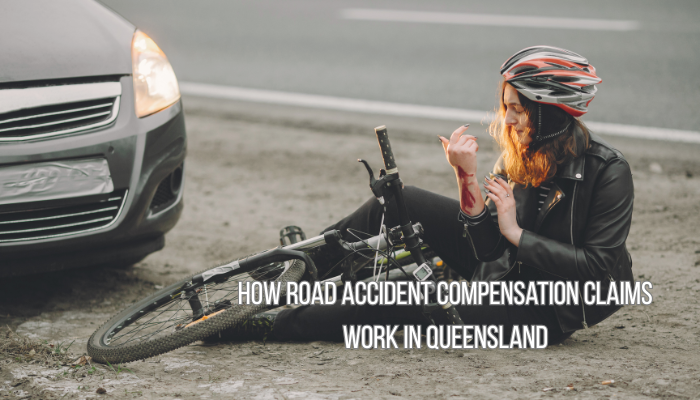
In Queensland, road accident compensation claims work through the CTP (Compulsory Third Party) insurance scheme. The process follows a defined sequence under the Motor Accident Insurance Act 1994. Missing any part of it can affect your claim.
The team at https://vbrlaw.com.au has seen what happens when people go through this without knowing what is ahead. Missed deadlines, gaps in evidence, and cases end up stalled well before reaching a compulsory conference. That is the situation many injured road users face, and this guide explains how the process works. We will cover:
- Who can make a claim
- What compensation includes
- How it is calculated
Read through each section to see how it applies to your situation.
What Is a Road Accident Claim in Queensland?
Queensland’s CTP scheme covers compensation for anyone injured in a car accident caused by another driver’s fault. The application goes to the CTP insurer of the at-fault vehicle, rather than directly to the driver.
Below are the four components that underpin every road injury case:
- The CTP Scheme: Each registered motor vehicle in the state carries a compulsory third party insurance policy, included in the cost of annual registration. Here, the injured person claims against that vehicle’s insurer, instead of the insurance company of the at-fault driver directly.
- A Fault-Based System: Queensland’s CTP only covers injuries where another vehicle owner or driver is responsible. The amount of compensation available depends on establishing fault. Where fault is shared, the payout reduces in proportion.
- The Common Law Pathway: Injured road users can pursue a personal injury application through common law, regardless of injury severity. For instance, general damages, lost income, and care costs are all eligible heads of loss under this pathway.
- The Insurance Commission’s Role: MAIC is responsible for regulating the CTP scheme and overseeing its operations, such as time limits and insurer obligations. It also administers the Nominal Defendant scheme for uninsured or unidentified vehicles.
In short, the CTP scheme separates claims so that property damage is dealt with via the car owner’s insurance, and personal injuries are handled through the CTP insurer. Road users need to know which side of that line their losses fall on before they make an application.
Who Can Make a Motor Vehicle Accident Claim?
Passengers, pedestrians, cyclists, and motorcyclists all have the same right to process under Queensland’s CTP scheme if another party caused the accident. Yet most people assume only drivers can make a motor vehicle accident claim (that is not quite right).
Here is a breakdown of who is covered and how fault applies to each group.
Drivers and Passengers in a Car Accident
Drivers injured in a car accident can make a claim against the other driver’s insurer, provided the other party was at-fault, even partially. In fact, passengers tend to have the strongest eligibility of all, since they are rarely responsible for the crash itself.
That said, contributory negligence still applies. If you were not wearing a seatbelt, for example, or were under the influence of drugs or alcohol at the time, the insurer may reduce your compensation. A lawyer can help you understand how those details affect your application.
Pedestrians, Cyclists, and Motorcyclists
Pedestrians, cyclists, and motorcyclists are all eligible to make an injury claim under the Motor Accident Insurance Act 1994 (only if another party’s negligence caused the accident). Say, a cyclist hit by a car while following road rules can claim against that vehicle’s insurer in the same way a driver would.
Motorcycle pillion passengers are covered too, regardless of who owned the vehicle involved. The victim does not need to have been in a car at all. For these cases, police reports and exchange of details at the scene are particularly useful evidence.
How Is Road Injury Compensation Calculated?
The ISV (Injury Scale Value) is the starting point for calculating compensation in a personal injury claim. It is a score assigned to your injuries that determines what you can receive for pain and suffering.
The full calculation is based on two different sets of evidence.
1. The Injury Scale Value: How Pain and Suffering Is Assessed
The score runs from 0-100, with higher scores reserved for more serious or permanent injuries like spinal damage or traumatic brain injuries. Under the Civil Liability Act 2003 and the Civil Liability Regulation 2025, each injury category carries a defined score range.
General damages (the compensation for pain and suffering) are calculated from that score alone. Take a car accident resulting in a moderate soft tissue injury, for example. It will attract a far lower ISV than one involving permanent impairment.
As a result, the compensation payout for the soft tissue injury would be significantly smaller.
2. Medical Evidence and Financial Loss in a Claim
Strong medical evidence often separates a well-supported case from one that stalls. Particularly, specialist reports can establish:
- The nature of your injuries
- The treatment required
- Any permanent impairment
Your doctor’s records and hospital notes feed directly into the ISV assessment.
On the financial side, payslips, tax returns, and employment records calculate income lost during recovery. You can provide the clearest possible picture of the damage caused by gathering these documents after an accident.
The Entire Car Accident Claim Process
The car accident claims process in Queensland follows a set sequence and the time limits attached to it are firm. Missing a deadline (particularly the nine-month window to lodge your case) can affect your ability to pursue compensation.
The table has the full sequence at a glance:
| Step | Action | Important Detail |
| 1 | Report the accident to police | Required under the CTP scheme as soon as possible |
| 2 | Exchange details with all drivers involved | Names, addresses, registration numbers, and insurer details |
| 3 | Lodge a Notice of Accident Claim (NOAC) | Must be filed within nine months of the accident date (missing this window can close the door on a valid application entirely) |
| 4 | Insurer assesses liability | Rehabilitation costs and medical treatment may be covered once liability is admitted |
| 5 | Independent medical examinations | Arranged once your injuries are stable; used to assess permanent impairment |
| 6 | Compulsory Conference | Final pre-court step under the civil procedure; most personal injury claims resolve here |
| 7 | Court proceedings (if required) | Must commence within three years of the accident; the administrative tribunal or court determines the outcome |
In most cases, a lawyer will guide you through each stage. They will help gather all the information needed, and make sure legal costs and procedural requirements do not catch you off guard.
What If the At-Fault Driver Has No Car Insurance?
If the other driver involved in your car accident is uninsured, unregistered, or simply cannot be identified, you can still make a claim. The state’s Nominal Defendant scheme exists precisely for this situation. It steps in as the insurer when there is no registered insurance policy to proceed against.
The catch is the time limit. For unidentified vehicles, your Notice of Accident Claim must reach the Nominal Defendant within three months of the accident date. That is significantly shorter than the standard nine-month window.
For unregistered vehicles, the standard time limits generally apply, though the details vary.
Your Road to Compensation After a Motor Vehicle Accident
Queensland’s road accident claims process has several stages, and each one carries consequences. Getting legal advice promptly after an accident often ensures you stay on track. A lawyer can confirm:
- Identify the responsible vehicle owner where possible
- Check the registration number
- Make sure your case is lodged correctly before the deadline closes
If you’ve been injured in a car accident, the team at vbr Lawyers handles motor vehicle accident claims throughout the state. Visit our website to read further about what applies to you.