
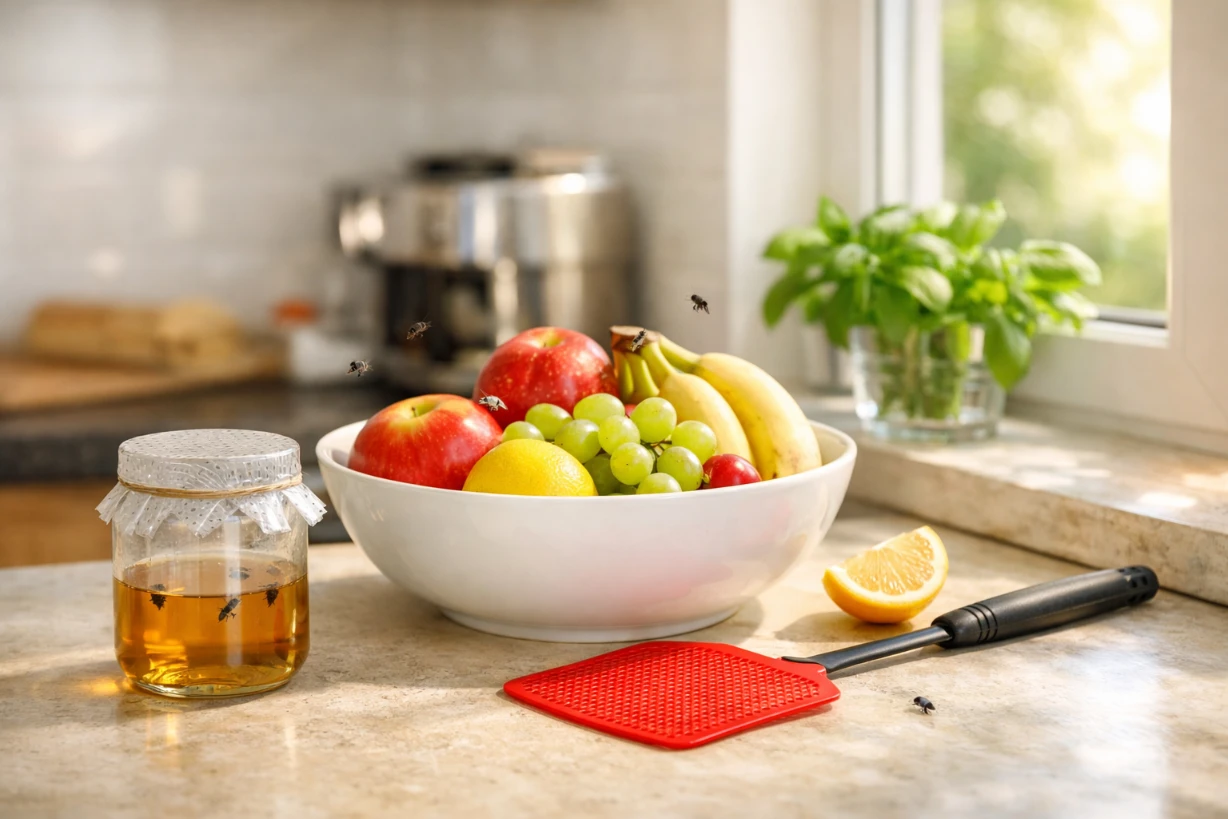
Flies in the kitchen can make any home feel dirty, even when we clean every day. They buzz around the sink, land on food, and seem to come back no matter how many we swat. Many of us search for how to get rid of flies fast, safely, and for good, especially in the room where we cook and eat. In this guide, we walk through practical, science-backed, and easy hacks that really work, using tools most households already have.
Why Flies Love Your Kitchen
To know how to get rid of flies in your kitchen, it helps to understand what pulls them in. Flies are not random. They follow smells and moisture. When those two things meet, we end up with a buzzing problem.
Houseflies and fruit flies are the most common indoor pests. They are drawn to:
- Rotting or overripe fruits and vegetables
- Uncovered leftovers and dirty dishes
- Food spills under appliances
- Sticky trash can lids and leaking garbage bags
- Moist drains, sinks, and garbage disposals
Once flies find a food source, they lay eggs nearby. A single female fly can lay hundreds of eggs. That is why fly problems seem to explode overnight. This also explains why how to get rid of flies is not only about killing adults. It is also about removing all the places where they breed.
Step 1: Cut Off Food Sources The Smart Way
Our first line of defense is to make the kitchen less inviting. This does not mean deep cleaning every hour. It means focusing on the spots flies love most and building simple habits we can keep up.
Start with these areas:
Countertops and tables. Wipe them after every meal with warm soapy water or a gentle cleaner. Pay attention to sticky rings from juice, soda, or wine. Flies pick up even faint sugar smells.
Sink and dishes. Do not leave dirty dishes in the sink overnight. If that is not possible, at least rinse food scraps off. Run the garbage disposal with hot water and a bit of dish soap to wash away residue that attracts flies.
Trash can and recycling. Use bags that fit well, tie them when full, and take them out daily during warm months. Wash the inside and lid of the trash can every week. Even thin layers of grime can smell like a feast to flies.
Fruit bowl and bread box. Keep ripe or cut fruit in the fridge, not on the counter. Throw away any fruit with soft, moldy spots. Fruit flies can hatch from eggs already on the skin of produce. When we learn how to get rid of flies, we also learn to stay one step ahead of them.
Step 2: Clean Hidden Fly Hot Spots
Flies often breed in places we do not look at every day. We may wipe the top of the stove and forget what is under it. Or we may mop the center of the floor and miss corners where crumbs collect.
Focus some time each week on these hidden zones:
Under and behind appliances. Pull out the stove and fridge if you can do it safely. Sweep up food bits, dust, and crusted spills. Then mop or wipe with a mild cleaner. The smell alone can make a big difference.
Under the sink. Check for leaks, damp sponges, or old cleaning rags. Moist, dark spaces are perfect for flies and other pests. Fix leaks and let the area dry fully. Store sponges where they can air out.
Floor edges and corners. Crumbs roll to baseboards and stay trapped. Use a crevice tool on your vacuum or a small brush before mopping. This detail work is not fancy, but it is key when we talk about how to get rid of flies naturally.
Step 3: Target Kitchen Drains And Disposals
Many people are surprised to learn that drains can be a main source of tiny flies. Drain flies and fruit flies lay eggs in the slime that lines pipes and disposals. Even if the sink looks clean, that film inside can support a whole colony.
To clean kitchen drains safely, we can use simple items we likely already have:
Baking soda and vinegar flush. Pour half a cup of baking soda down the drain, followed by one cup of white vinegar. It will fizz and bubble. Let it sit for 10 to 15 minutes, then flush with hot water. This helps loosen organic buildup where flies breed.
Boiling water rinse. Once a day for a few days, pour a kettle of boiling water down the drain. This helps wash away fresh eggs and larvae.
Brush the disposal. If you have a garbage disposal, turn off the power. Use a long-handled brush and dish soap to scrub the rubber splash guard and the upper part of the unit. This area often holds hidden food slime.
Repeating this routine for a week gives better results than doing it once. When we think about how to get rid of flies for good, we must focus on the places where their babies actually grow.
Step 4: Use Simple Homemade Traps That Work
Once we have cleaned and removed food sources, we still may see adult flies flying around. This is where safe, homemade traps come in. They help cut down the fly population without harsh chemicals.
Apple Cider Vinegar Trap For Fruit Flies
Fruit flies love the smell of fermented fruit. Apple cider vinegar smells like that to them, so it makes a powerful bait.
Here is a basic version:
- Pour a small amount of apple cider vinegar into a glass or jar.
- Add a few drops of dish soap to break the surface tension so flies sink.
- Cover the top with plastic wrap and poke 4 to 6 small holes with a toothpick.
The flies crawl in through the holes and cannot easily find their way out. Within a day, you often see several trapped. This simple setup is one of the most common answers people share when they talk about how to get rid of flies in kitchens without sprays.
Wine Or Beer Trap For Houseflies
If you have a bit of old wine or beer, do not throw it out. Pour it into a jar and use it like the cider vinegar trap. Cover with plastic wrap and add small holes. The yeasty, sweet smell pulls in both houseflies and fruit flies.
Paper Cone Trap With Fruit
Another easy trap uses a piece of overripe fruit:
Place a slice of banana or apple in the bottom of a jar. Roll a sheet of paper into a cone and place it in the jar so the narrow end points down without touching the fruit. Flies go down the cone toward the food and have a hard time finding the small exit. It is a gentle but effective way to handle how to get rid of flies when you do not want any chemical bait in your kitchen.
Step 5: Keep Flies Out Before They Get In
Stopping flies at the door is just as important as cleaning the kitchen itself. Even when we master how to get rid of flies inside, open entry points can bring in new ones every day.
Consider these simple barriers:
Check window screens. Patch any tears, even small ones. Flies can slip through tiny gaps. Make sure screens fit snugly in the frame and are not bent or warped.
Use door habits. Try not to leave doors standing open, especially in summer. If kids run in and out, remind them to close the door gently but fully. A self-closing screen door can help.
Seal cracks and gaps. Look around windows, doors, and where pipes enter the wall. Use weatherstripping or caulk to close open spaces. This helps keep out flies, ants, and even cold air in winter.
Natural Repellents You Can Use Around The Kitchen
Once we reduce flies and clean their breeding spots, we can also use gentle repellents that discourage them from hanging around. These do not replace cleaning, but they support our efforts and fit into a long-term plan for how to get rid of flies and keep them away.
Some options include:
Herbs on the windowsill. Flies do not like strong smells from some fresh herbs. Basil, mint, bay leaves, and rosemary can help. Plant them in small pots near windows or doors. They also add flavor when we cook.
Essential oil sprays. A light spray made from a few drops of eucalyptus, lemongrass, lavender, or peppermint oil mixed with water can be used on window frames and doorways. Always test on a small area first and keep away from pets that may be sensitive.
Clove-studded citrus. In some homes, people stick whole cloves into halves of lemons or oranges and place them on the table or counter. The strong smell bothers flies more than people and can help protect food during short gatherings or meals.
When To Use Store-Bought Solutions
Sometimes, no matter how serious we are about how to get rid of flies with home methods, the problem is bigger than we can handle alone. Maybe the infestation started outside, or maybe there is a hidden breeding site in the walls or in a drain we cannot reach.
Store-bought products can help in these cases, but we still need to use them wisely in a kitchen where we prepare food.
Sticky fly traps. These hanging or stand-up strips catch houseflies that land on them. They do not release fumes, but we should hang them away from food surfaces and out of reach of children and pets.
UV light traps. Some devices use UV light to lure flies and then trap them on a sticky board inside. They work quietly and are a good option if we have many flies but do not want sprays in the air.
Insect sprays. Aerosol sprays should be a last choice in kitchens. If we use them, we must always follow the label, cover or remove food, and wipe surfaces after. For long-term comfort, solving the source of the flies is always better than relying on constant spraying.
Why Flies Are More Than Just Annoying
We often focus on the noise and the irritation flies cause. But the deeper reason people search how to get rid of flies is health. Flies can carry bacteria from trash, drains, or animal waste and then land on our food, forks, and counters.
Houseflies pick up germs on their legs and mouthparts. They can spread organisms that cause stomach bugs and other illnesses. This does not mean every fly landing on a plate leads to disease, but it does mean we are right to take them seriously.
By cleaning up food sources, scrubbing drains, and using traps, we lower both the number of flies and the chance that they spread anything harmful inside our kitchen.
Building A Simple Weekly Routine
Good habits make the difference between a short fight with flies and a constant battle. The goal is not perfection, but a routine we can actually follow, even on busy days.
A sample weekly plan could look like this:
- Daily: Wipe counters and table, rinse dishes, empty trash as needed, and run hot water in drains.
- Twice a week: Refresh vinegar traps, wipe trash can lid, and check fruit for soft spots.
- Once a week: Clean drains with baking soda and vinegar, mop kitchen floor, and sweep under the table and counters.
- Once a month: Pull out appliances if possible, deep clean behind and under them, and check window screens for new gaps.
This kind of simple routine keeps us ahead of the problem. It turns the big question of how to get rid of flies into a set of small tasks spread across our days.
When To Call A Professional
Sometimes flies keep returning even after we clean, trap, and seal. That can be a sign of a deeper issue such as a dead animal in a wall, a major plumbing leak, or a breeding site hidden in a crawl space. In these cases, a licensed pest control expert can inspect the home, search for the true source, and suggest safe treatments.
We should not feel we have failed if we reach this point. Some fly problems are simply beyond what we can see and fix from the kitchen floor. Asking for help is part of fully solving how to get rid of flies when the usual hacks do not work.
Bringing It All Together
Flies in the kitchen are more than a small annoyance. They touch our food, our routines, and even how we feel when friends or family visit. Learning how to get rid of flies step by step gives us back a sense of calm and control in our own home.
By cutting off food sources, cleaning drains, using easy homemade traps, blocking entry points, and adding light repellents, we build layers of protection. With a simple routine and, when needed, professional help, we can stop treating flies as a normal part of kitchen life and start seeing them as a problem we know how to solve.
FAQs About Getting Rid Of Flies In The Kitchen
How do I get rid of flies in my kitchen fast?
To act fast, combine a quick clean with traps. Clear food, wipe counters, empty the trash, and rinse dishes. Then set up apple cider vinegar traps or sticky traps near problem areas. Close windows and doors where you can. This gives a strong first hit while you plan long-term steps on how to get rid of flies for good.
Why do I suddenly have so many flies in my kitchen?
A sudden swarm often means flies found a new food source or breeding site. It could be rotting fruit, a forgotten trash bag, a dirty drain, or even something dead in a wall or crawl space. Check trash, fruit bowls, and drains first. If the problem continues, you may need a professional to look for hidden causes.
What smell will keep flies away from my kitchen?
Flies dislike strong scents like basil, mint, clove, eucalyptus, and peppermint. Fresh herb pots on the windowsill, clove-studded lemons, or a light essential oil spray on door frames can help keep them away. These methods support how to get rid of flies, but they work best along with good cleaning and sealing.
Are homemade fly traps safe to use around kids and pets?
Most homemade traps that use apple cider vinegar, fruit, wine, or beer with dish soap are safer than chemical sprays. Still, place them where small children and pets cannot drink or spill them. Use jars or bottles that are hard to tip over and check them daily.
How long does it take to get rid of fruit flies in a kitchen?
With steady effort, many homes see a clear drop in fruit flies within 3 to 7 days. You need to throw out overripe fruit, wash produce, clean drains, and keep vinegar traps in place. Because fruit flies reproduce quickly, missing even one breeding site can slow progress, so try to follow all key steps in your plan for how to get rid of flies.
Can dirty drains really cause flies in the kitchen?
Yes. Drain flies and even fruit flies can breed in the slimy film inside drains, especially when there is food waste and standing water. If you see tiny flies near the sink, clean the drain with baking soda, vinegar, and boiling water for several days in a row. Scrub the garbage disposal and rubber guard as well.
Should I use bleach to get rid of flies in my drain?
Bleach can kill some germs, but it often runs quickly through pipes and does not remove the thick organic film where flies breed. A better method is a mix of baking soda and vinegar, followed by boiling water and brushing when possible. This tackles the real source and supports better long-term results when working on how to get rid of flies in kitchen drains.