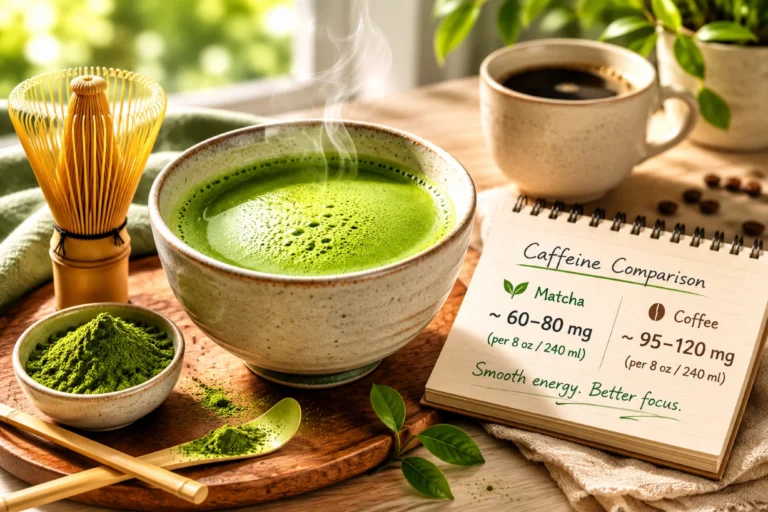
Matcha caffeine is one of the main reasons people reach for this bright green tea powder each morning. Many of us want the smooth energy that matcha gives, but we also want to know exactly how much caffeine is in that daily cup, how it compares with coffee, and how to drink it in a safe way.
What Makes Matcha Caffeine Different From Other Caffeine
Matcha comes from the same plant as regular green tea, but it is grown, picked, and prepared in a special way. Farmers shade the tea plants before harvest, which raises levels of caffeine and other plant compounds. Then the leaves are stone ground into a fine powder. When we drink matcha, we consume the whole leaf, not just a water infusion like normal tea.
This means matcha caffeine enters the body together with a rich mix of amino acids, antioxidants, and plant fiber. The most famous of these is L theanine, an amino acid linked with calm focus. Many people say matcha gives them a smooth, steady alertness rather than the quick spike and crash that often comes with coffee.
How Much Caffeine Is In Matcha Powder
There is no single exact number for matcha caffeine, but we can look at good averages. The caffeine content depends on where it is grown, how it is processed, and how much powder you use. Still, we can give useful ranges for daily life.
On average, 1 gram of matcha powder contains about 18 to 35 milligrams of caffeine. A usual serving for a homemade latte uses 1 to 2 grams of matcha. A traditional bowl of matcha used in Japanese tea ceremony can be even stronger.
Average caffeine per serving size
These ranges apply to most quality matcha products:
- 1/2 teaspoon matcha (about 1 gram): 18 to 35 mg caffeine
- 1 teaspoon matcha (about 2 grams): 36 to 70 mg caffeine
- Traditional usucha (thin tea, 1 to 2 grams): 30 to 70 mg caffeine
- Traditional koicha (thick tea, 3 to 4 grams): 60 to 140 mg caffeine
By comparison, a typical 8 ounce cup of brewed coffee often holds around 80 to 120 milligrams of caffeine, sometimes more. So a common matcha latte at home often has a bit less caffeine than a strong coffee, but still a clear energy lift.
Matcha Caffeine Compared With Coffee And Other Drinks
To make sense of matcha caffeine in real life, we need to look at other popular drinks. Many of us drink more than one source of caffeine each day, so this comparison helps us plan a safe limit.
Caffeine comparison at a glance
These are typical caffeine ranges for standard servings:
- Matcha (1 to 2 g powder in hot water): 30 to 70 mg
- Brewed coffee (8 oz): 80 to 120 mg
- Espresso shot (1 oz): 60 to 80 mg
- Regular green tea bag (8 oz): 20 to 45 mg
- Black tea bag (8 oz): 40 to 60 mg
- Popular soda (12 oz): 30 to 55 mg
- Energy drink (8 to 16 oz): 70 to 160 mg or more
Matcha sits in the mid range. It usually carries more caffeine than a basic green tea bag, but less than a large, strong coffee. However, matcha caffeine often feels different because of its slow, steady release and the presence of L theanine.
Why Matcha Caffeine Feels Smoother
Many people notice that matcha gives them a clear head and stable mood, instead of jitters. There are several reasons behind this special effect.
The L theanine and caffeine team
L theanine is a natural amino acid in tea leaves. It can move into the brain and may support alpha brain waves, which are linked with calm but alert states. When L theanine and matcha caffeine act together, they may:
- Support relaxed focus instead of nervous energy
- Reduce the sense of a “caffeine crash” later
- Help some people feel less anxious after drinking caffeine
This pairing is one reason students, writers, and office workers like matcha for tasks that need steady attention. Many describe it as “coffee without the chaos,” even though the total caffeine can be similar to a light coffee.
Slower absorption of matcha caffeine
Matcha powder still contains plant fiber and complex molecules. When we drink it mixed with water or milk, these slow the rate at which caffeine moves from the gut into the bloodstream. The rise in caffeine is more gentle, which may reduce palpitations and sharp mood swings in sensitive people.
How Much Matcha Per Day Is Safe
Caffeine tolerance is personal. Age, body weight, health conditions, and usual intake all matter. Still, expert groups give general daily limits for most healthy adults.
Many health organizations suggest that up to 400 milligrams of caffeine per day is a moderate level for a healthy adult who is not pregnant. This equals about 5 to 10 grams of matcha spread through the day, but that would be a lot of matcha for most people.
Practical daily matcha guidelines
For most adults with normal caffeine tolerance:
- 1 to 2 servings per day (1 to 2 grams each) is a gentle level
- Up to 3 servings per day stays near or under 200 mg caffeine for most matcha
- Above 4 servings per day may push some people toward restlessness or poor sleep
People who are pregnant, nursing, or have certain heart or anxiety problems may need lower limits. For them, one modest serving of matcha a day or less may be more suitable. Their total caffeine from all sources should often stay near or below 200 milligrams per day, unless a health care professional gives different advice.
Factors That Change Matcha Caffeine Content
Not all matcha is equal. Two cups that look the same color may hold very different levels of caffeine. Several factors shape the final amount in your bowl or latte.
Grade and quality of matcha
Ceremonial grade matcha, usually made from young shade grown leaves near the top of the plant, tends to have higher levels of matcha caffeine. It is often used plain with hot water. Culinary grade matcha, used for baking or lattes, may come from older leaves with slightly lower caffeine.
High quality Japanese matcha, especially from regions like Uji or Nishio, usually has more consistent caffeine levels than low cost blends from mixed sources.
Serving size and recipe style
The amount of powder is the main factor that decides how much matcha caffeine you drink. A “small spoonful” can double in size between people. For better control, it helps to measure:
- Use a kitchen scale to weigh 1 to 2 grams of powder
- Learn what that looks like with your usual spoon or bamboo scoop
- Note how you feel after that amount, then adjust up or down over a few days
Thick matcha used in formal tea practice can contain several grams of powder in a single bowl. This gives strong flavor and a high caffeine dose, so it is not always suited for those who are sensitive.
Water temperature and steeping style
Since matcha is whisked, not steeped, water time does not affect caffeine like normal tea bags. But hotter water can change the feeling of the drink. Many people prefer water around 160 to 175 degrees Fahrenheit for a smoother taste and a more gradual drinking pace, which may make the matcha caffeine feel less sharp.
Health Effects Of Matcha Caffeine
Matcha brings both the pros and cons of caffeine. It also carries a high level of catechins, especially EGCG, which are strong antioxidants. We can look at both the possible benefits and the risks.
Possible benefits associated with matcha caffeine
When used in moderate amounts, matcha caffeine may support:
- Improved alertness and reaction time during work or study
- Better sense of focus during tasks that need attention
- Increased sense of calm awareness, thanks to L theanine
- Support for a healthy metabolism and fat use in the body
These effects depend on personal response. Some people feel strong changes even at low doses, while others feel only mild effects.
Risks and side effects of too much matcha caffeine
High intakes of matcha caffeine can bring the same issues as coffee or energy drinks. These may include:
- Jitters, nervousness, or racing thoughts
- Fast heart rate or palpitations in sensitive people
- Stomach upset, nausea, or loose stools
- Headaches or trouble falling asleep
If you notice these signs, lowering your total daily caffeine, including matcha, is wise. Some people also do better when they avoid matcha caffeine after mid afternoon so sleep is not disturbed.
How To Use Matcha Caffeine Wisely In Your Day
Matcha can fit into a balanced routine if we plan when and how we drink it. A few simple steps help us enjoy the calm energy while lowering the chance of side effects.
Plan timing around your sleep
Caffeine can stay in the body for several hours. Many people still feel matcha caffeine six hours after drinking it. To protect sleep:
- Keep your last cup of matcha at least 6 to 8 hours before bedtime
- Try moving your main serving to mid morning if you feel wired at night
- Use a smaller serving if you enjoy an afternoon matcha latte
Balance matcha caffeine with food and water
Drinking matcha on a very empty stomach can bother some people, especially those who are sensitive to green tea catechins. Many feel better when they:
- Drink matcha after a light meal or with a snack
- Stay well hydrated with plain water through the day
- Avoid mixing matcha caffeine with several other strong stimulants at once
If your stomach often feels uneasy with matcha, try using a smaller serving, more water, and taking slow sips instead of chugging.
Reading Labels And Choosing Matcha With Suitable Caffeine
Most brands do not print exact matcha caffeine numbers, but some give useful estimates. When picking a product, we can still make smart guesses.
Clues that affect caffeine level
Here are details on labels or websites that can hint at matcha caffeine strength:
- Origin: Shade grown Japanese matcha often has higher caffeine than many Chinese green teas sold as “matcha style”
- Grade: Ceremonial grade often uses younger leaves with more caffeine and L theanine
- Blend: Products mixed with sweeteners or milk powders may dilute the caffeine per teaspoon
- Serving instructions: If the brand suggests 2 to 3 teaspoons per cup, the caffeine will be much higher
If caffeine control is key for you, look for brands that publish lab tested ranges. While still not exact, they can guide your daily limits better than guesses alone.
Who Should Be Careful With Matcha Caffeine
Most healthy adults can enjoy moderate matcha use. Still, some groups should take extra care and may want to talk with a health care professional before making matcha a daily habit.
Groups that may need lower matcha caffeine
Extra care is wise for:
- Pregnant or nursing people, due to lower safe caffeine limits
- Those with heart rhythm problems or uncontrolled high blood pressure
- People with panic attacks or strong anxiety disorders
- Children and teens, who are more sensitive to stimulants
- People taking certain medicines that interact with caffeine
For these cases, smaller amounts of matcha, or decaf green tea without matcha caffeine, may be safer options. Always consider the total from coffee, soda, chocolate, and medicines.
Key Takeaways About Matcha Caffeine In Your Daily Cup
Matcha caffeine sits between regular green tea and brewed coffee in strength, but the feeling it gives can be quite different. Because we drink the whole leaf, we take in more beneficial plant compounds along with the caffeine, especially L theanine. This mix often leads to steady, calm focus for many people.
A usual home serving of matcha made with 1 to 2 grams of powder will often contain around 30 to 70 milligrams of caffeine. This means most healthy adults can enjoy one to three servings spread across the day and stay within common guidelines, as long as other caffeine sources remain modest.
By paying attention to matcha grade, serving size, timing, and how your body feels, you can make matcha caffeine your ally instead of a cause of stress. With a bit of care, that bright green daily cup can become a steady part of a clear headed, focused routine.
Frequently Asked Questions
Does matcha have more caffeine than coffee?
Matcha caffeine is usually lower than a strong cup of coffee per serving. A normal matcha using 1 to 2 grams of powder often holds 30 to 70 mg of caffeine, while an 8 ounce coffee often holds 80 to 120 mg. Very thick ceremonial matcha can reach coffee like levels if several grams of powder are used.
How many cups of matcha per day are safe?
For most healthy adults, 1 to 3 cups of matcha per day with 1 to 2 grams of powder each cup is a sensible range. This usually keeps total matcha caffeine under common daily limits, as long as other caffeine sources are not very high. People who are pregnant, nursing, or sensitive to caffeine often do better with just 1 modest serving.
Why does matcha caffeine feel different from coffee?
Many people feel that matcha caffeine brings a smoother, more stable energy than coffee. This is likely due to L theanine and other tea compounds that may promote calm focus and slow the rise of caffeine in the blood. The result can be less jittery energy and fewer crashes for some drinkers.
Can I drink matcha if I am sensitive to caffeine?
Some people who are sensitive to caffeine handle small amounts of matcha better than coffee, but others still react strongly. If you are sensitive, start with a low serving, such as half a gram to 1 gram, drink it earlier in the day, and watch how your body responds. If you feel anxious, shaky, or have trouble sleeping, it is best to cut back or avoid matcha caffeine.
Is matcha good for focus and studying?
Many students and workers use matcha for long study or work sessions. Matcha caffeine can help raise alertness, and L theanine may support a calm, steady type of focus. A moderate serving about 30 minutes before a study block can be enough for many people without causing too much stimulation.
What time of day should I drink matcha?
Most people enjoy matcha in the morning or early afternoon. Because matcha caffeine can last several hours, drinking it too late may disturb sleep. A good rule is to avoid matcha within 6 to 8 hours of your usual bedtime, especially if you know you are sensitive to caffeine.
Can matcha replace coffee completely?
For some people, yes. Matcha caffeine can provide a clear energy lift along with a different flavor and fewer jitters. Others still prefer the stronger kick and taste of coffee. If you want to switch, you can start by replacing one coffee with one matcha each day and notice how your body and mood respond.
Does matcha latte from cafes have a lot of caffeine?
Matcha lattes from cafes often use 2 to 4 teaspoons of powder, which can hold much more matcha caffeine than a small homemade cup. Some may contain 70 to 140 mg of caffeine or even more, depending on how much powder the barista uses. If you are watching your caffeine, you can ask how many scoops of matcha are in the drink and request fewer if needed.