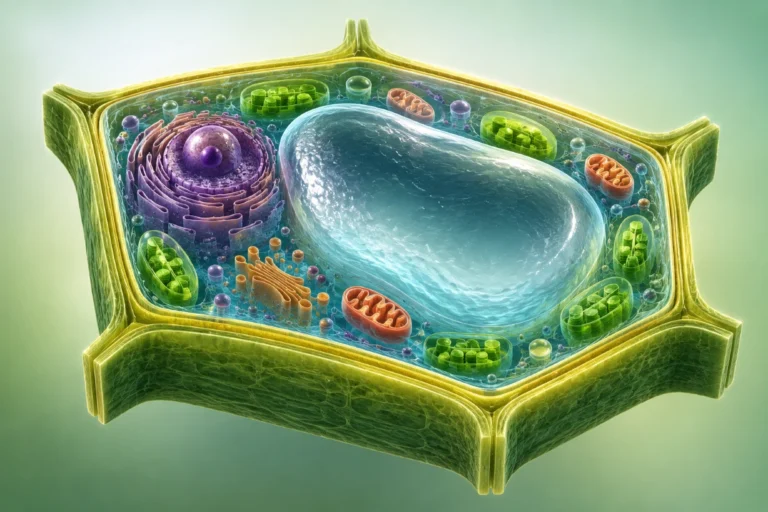
When students first ask, “which part of a plant cell helps maintain its shape?”, they usually expect one quick word as an answer. The short answer is the cell wall. However, if we stop there, we miss the bigger picture of how a plant cell stays strong, firm, and able to stand upright against wind, rain, and gravity.
In this guide, we look closely at how a plant cell keeps its shape, why that shape matters, and how several parts work together to support the cell. We focus on real, clear explanations so that a middle school student, a parent helping with homework, or a teacher preparing a lesson can all follow along with confidence.
Answer: Which Part Of A Plant Cell Helps Maintain Its Shape?
If we answer the question directly, “which part of a plant cell helps maintain its shape?”, the main structure is the cell wall. The cell wall is a tough outer layer that surrounds the plant cell outside the cell membrane. It acts like armor for the cell and keeps it from collapsing or bursting.
But that is only part of the story. Other parts also help keep the cell strong:
- Cell wall – main structure that gives strength and a fixed shape
- Central vacuole – filled with water, creates pressure that pushes against the wall
- Cytoskeleton – a network of protein “ropes” inside the cell that supports the cell from within
So when we ask which part of a plant cell helps maintain its shape, we really talk about a team effort, with the cell wall as the leader, the vacuole as the pressure maker, and the cytoskeleton as the inside frame.
What Is The Cell Wall And Why Does It Make Plant Cells Rigid?
The cell wall is a stiff outer layer that lies just outside the thin cell membrane. If we think of the cell as a water-filled balloon, the cell wall is like a strong cardboard box around that balloon. The box keeps the balloon from changing shape too much, even when pressure inside changes.
This wall is found in plant cells, fungi, algae, and some bacteria, but not in animal cells. This is one reason plants can stand upright while animals usually need bones or other support systems.
Main Ingredients Of The Plant Cell Wall
The cell wall works as the main answer to “which part of a plant cell helps maintain its shape?” because of what it is made of:
- Cellulose – long chains of sugar molecules bundled into fibers, like threads twisted into a rope
- Hemicellulose – smaller fibers that connect cellulose chains together
- Pectin – a jelly-like substance that fills spaces between fibers and glues cells together
- Lignin (in woodier plants) – a hard material that makes walls even stronger and more waterproof
These ingredients create a strong but flexible wall. It is not like stone; it can bend a little without breaking, which helps the plant handle wind or small physical blows.
How The Cell Wall Maintains Shape During Everyday Life
During the day, water moves in and out of plant cells. When the cell takes in water, the inside pressure rises. Without a cell wall, a plant cell might swell too much and burst. With a cell wall, the wall limits how much the cell can grow. The shape stays almost the same, and the cell stays safe.
This explains why the cell wall is the clear answer when asking which part of a plant cell helps maintain its shape. It sets the outer limits for the cell and keeps everything inside from pushing the membrane out too far.
The Role Of The Central Vacuole In Keeping The Cell Firm
While the cell wall provides strength, the central vacuole provides pressure. The vacuole is a large, fluid-filled sac that can occupy more than half of the space inside a mature plant cell.
Inside the vacuole is mostly water mixed with minerals, salts, and other dissolved substances. When the vacuole fills with water, it swells and pushes against the cell membrane. The membrane then presses against the cell wall. This pushing is called turgor pressure.
Turgor Pressure And Plant Cell Shape
Turgor pressure is critical for plant cells and plant tissues. It works together with the cell wall to keep cells firm and to help the plant hold its shape. If you ever saw a plant wilt on a hot day and then stand up again after watering, you have seen turgor pressure in action.
When there is enough water:
- The vacuole is full and large.
- Turgor pressure is high.
- The cell pushes hard against its wall and stays firm.
- Leaves and stems stand up strong.
When water is lost:
- The vacuole shrinks.
- Turgor pressure drops.
- The cell wall no longer feels a strong push from within.
- Cells become softer and the plant wilts.
So, if we ask again which part of a plant cell helps maintain its shape, we should mention not only the cell wall, but also the central vacuole and its role in controlling turgor pressure.
How The Cytoskeleton Supports Plant Cell Structure From Inside
Deep inside the cell, there is yet another structure that helps maintain cell shape. This is the cytoskeleton, a network of thin protein fibers that cross the cell like a tiny scaffold or framework.
The cytoskeleton contains:
- Microtubules – hollow tubes that help shape the cell and move organelles
- Actin filaments – thin threads that support the outer areas of the cell and help movement inside the cell
- Intermediate filaments (in some cells) – provide extra stability
Even though we usually answer “cell wall” when someone asks which part of a plant cell helps maintain its shape, the cytoskeleton quietly does its job in the background. It helps the cell keep its inner layout, so organelles like chloroplasts and mitochondria stay in the right area and the cell can function smoothly.
How Different Cell Parts Work Together To Keep Shape
Plant cells are strong because several parts work together, not because of a single part alone. If we look at shape from the outside to the inside, we can see a clear pattern:
1. Cell wall
This is the tough outer shell. It sets the basic shape and does not let the cell expand without limit. It is the main answer to which part of a plant cell helps maintain its shape, because without it the cell would be soft and easy to deform.
2. Cell membrane
This thin, flexible layer just inside the cell wall controls what enters and leaves the cell. It presses tightly against the cell wall when turgor pressure is high and stays close even when pressure falls.
3. Central vacuole and cytoplasm
The fluid inside the vacuole and the cytoplasm together create pressure against the wall. This pressure helps the wall do its job well.
4. Cytoskeleton
This internal framework keeps everything in place, shapes internal regions of the cell, and guides traffic inside the cell.
Only when all these parts work together can the plant cell keep a steady shape under different conditions such as changes in water level, temperature, or light.
Why Cell Shape Matters For Plant Life
We often think of shape as something we see from the outside and forget that shape has a deep effect on how a cell lives and works. When we explore which part of a plant cell helps maintain its shape, we also explore why shape itself is so important.
Shape And Support For The Whole Plant
Plant tissues and organs depend on cell shape. Long, thin cells stack to form strong fibers in stems. Flat, wide cells in leaves help catch more sunlight for photosynthesis. All of this only works if each cell can keep its proper shape day after day.
The cell wall provides a stable frame, and the vacuole provides the force that turns many cells into stiff tissues. Together, they let plants grow tall without having bones.
Shape And Protection
Firm cells make firm tissues. Firm tissues protect the plant from:
- Strong wind or heavy rain
- Some insects or animals that try to push through tissues
- Sudden changes in water around the roots
Soft, weak cells would tear or burst more easily. Strong, well-shaped cells make the plant more likely to survive and grow.
Shape And Cell Communication
The exact shape of a cell also affects how it connects to its neighbors. Plant cells have small channels through the cell wall named plasmodesmata. These channels allow cells to share signals and nutrients.
If the wall did not keep a steady shape, these channels might not line up correctly between cells. So, again, when someone asks which part of a plant cell helps maintain its shape, the answer links directly to how cells communicate and work as a team.
How Cell Shape Changes During Growth
A plant cell does not always keep the same size. It must grow, divide, and sometimes change type during the life of the plant. During growth, the plant faces a problem: how can a cell wall that gives shape also allow the cell to grow bigger?
Plant cells solve this with a careful process:
1. The wall loosens slightly
Certain enzymes soften parts of the wall. This does not destroy the wall but makes it more flexible.
2. The vacuole takes in water
As the vacuole fills, turgor pressure rises. Because the wall is slightly softer at certain spots, it stretches in a controlled way.
3. New wall material is added
Cellulose and other wall materials are laid down to keep the new, larger shape strong and stable.
So even while the cell changes size, the plant still relies on the wall when thinking about which part of a plant cell helps maintain its shape. The wall is not a dead barrier; it is an active, living structure that responds to growth signals.
Differences Between Plant And Animal Cells In Shape Maintenance
Comparing plant and animal cells helps us see why the answer to “which part of a plant cell helps maintain its shape?” is so unique.
Plant cells usually have:
- A thick, rigid cell wall
- A large central vacuole creating strong turgor pressure
- More regular, box-like shapes in many tissues
Animal cells usually have:
- No cell wall, only a flexible membrane
- Many small vacuoles instead of one large one
- Shapes that can change more easily, such as round or irregular shapes
Animal cells depend more on their cytoskeleton and on outside structures like bones, skin, and connective tissues. Plant cells, in contrast, build strength into each cell by using the cell wall and the vacuole, which is why the cell wall keeps coming up when we ask which part of a plant cell helps maintain its shape.
Simple Ways To Remember Which Part Of A Plant Cell Helps Maintain Its Shape
Students and younger readers often like memory tricks. Here are two simple ones to help fix the idea in your mind:
1. Think of a water balloon in a box
The water balloon is the vacuole and cytoplasm, full of water. The cardboard box is the cell wall. The box sets the shape, and the balloon pushes against the box to keep it firm. If someone asks you which part of a plant cell helps maintain its shape, picture that box first. That is the cell wall.
2. Think of a house
The wooden frame of the house is the cytoskeleton. The walls are the cell wall, and the air inside the rooms is like the water-filled vacuole pushing out on the walls. All three are needed, but the walls are what we see as the main shape.
Conclusion: The Real Answer To “Which Part Of A Plant Cell Helps Maintain Its Shape?”
When we answer the question, “which part of a plant cell helps maintain its shape?”, the main and most direct answer is the cell wall. It surrounds the cell, sets a clear shape, and stops the cell from swelling too far or shrinking too much.
At the same time, the central vacuole and its turgor pressure, along with the cytoskeleton inside the cell, work closely with the wall to keep each cell strong, firm, and ready to do its job. Together, they let plants grow upward, spread out leaves, and stand against weather and gravity.
So whenever you wonder which part of a plant cell helps maintain its shape, think of this team: the solid cell wall, the water-filled vacuole pressing inside, and the quiet cytoskeleton holding everything in order.
FAQs
Which part of a plant cell helps maintain its shape the most?
The cell wall is the part of a plant cell that helps maintain its shape the most. It is a strong outer layer made mainly of cellulose. It prevents the cell from changing shape too much even when water goes in or out.
How does the vacuole help a plant cell keep its shape?
The central vacuole fills with water and creates turgor pressure. This pressure pushes the cell membrane against the cell wall. The push from within helps the cell wall stay firm, so the plant cell keeps its shape and the whole plant stays upright.
Do animal cells have a cell wall to maintain their shape?
No, animal cells do not have a cell wall. They only have a flexible cell membrane. Animal cells depend on the cytoskeleton and outside support such as bones or cartilage rather than a rigid wall to keep their shape.
Why do plant cells look more box-like than animal cells?
Plant cells often look box-like because the cell wall creates straight, firm sides. When many plant cells stack together, the walls line up to form rows and layers. This gives plant tissues a more regular, rectangular look under the microscope.
What happens to cell shape when a plant wilts?
When a plant wilts, its cells lose water from the vacuole. Turgor pressure drops, so the vacuole no longer pushes strongly against the cell wall. The cell wall still exists, but the cell becomes softer and less firm, and the leaves and stems droop.
Can a plant cell keep its shape without a cell wall?
Without a cell wall, a plant cell would act more like an animal cell. It would be more flexible and easier to deform. It could not hold high turgor pressure, and it would be more likely to burst when too much water enters. So the cell wall is essential for the plant cell to keep its shape under normal conditions.
How do the cell wall and cytoskeleton work together in plant cells?
The cell wall sets the outer shape and gives strong support, while the cytoskeleton creates an internal frame. The cytoskeleton helps the cell keep its inner shape, moves organelles to the right places, and works with the wall to resist forces that could bend or twist the cell.
Is the cell wall alive or dead tissue?
The cell wall itself is made of non-living materials like cellulose, but it is built, changed, and repaired by the living cell. Enzymes and proteins in the cell control how thick or soft the wall is, so the wall can grow while still helping the plant cell maintain its shape.