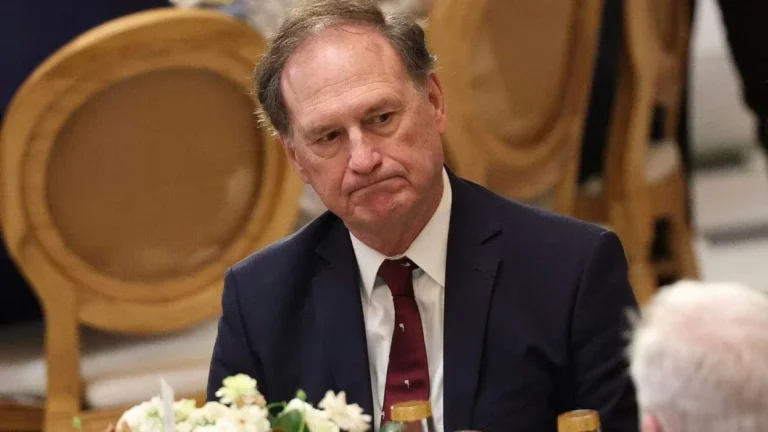
Supreme Court watchers often pause when they see a “lone dissent.” One justice stands apart from every other member of the Court and writes alone. When that justice is Samuel Alito, the moment carries special weight. Each Samuel Alito lone dissent gives us a sharp window into his legal mind, his values, and how he sees the role of the Court in American life.
Why Samuel Alito Lone Dissent Opinions Matter
A Samuel Alito lone dissent is more than a disagreement. It is a full statement of how he thinks the law should work, even when no colleague joins him. These solo opinions tell us:
First, what he is willing to fight for, even when he stands by himself. Second, how he reads the Constitution and federal laws in a very strict, text-focused way. Third, how he views culture, religion, crime, and government power in modern America.
When we analyze every Samuel Alito lone dissent in history, we see patterns. We see recurring themes about religion, speech, criminal justice, and voting. We also see how he often writes for the future, hoping that later courts or lawmakers will pick up his reasoning.
Alito’s Judicial Philosophy Behind His Lone Dissents
To understand any Samuel Alito lone dissent, we need to look at his broader method. Justice Alito tends to describe himself as a judge who follows the text and history, with caution about broad new rights or doctrines created by courts.
Several traits appear again and again:
- Strong focus on text and history: He looks closely at the words of the Constitution and statutes, and at how people at the time understood those words.
- Respect for tradition: He often gives weight to long-standing practices in law, religion, and public life.
- Skepticism of new implied rights: He is wary when the Court finds rights not clearly rooted in text or history.
- Concern for law enforcement power: He is usually sympathetic to police and prosecutors in close criminal cases.
- Attention to religious believers: He often gives strong protection to religious exercise and religious groups.
Every time we see a Samuel Alito lone dissent, one or more of these traits usually help explain why he split from the rest of the Court.
Early Examples: Samuel Alito Lone Dissent In Criminal and Civil Cases
Some of Justice Alito’s earliest lone dissents came in cases about criminal procedure and liability. Even when the Court was strongly united, he sometimes wrote separately to warn about what he saw as long term risks.
Criminal justice and police powers
In several cases, Alito has staked out a solo position in favor of law enforcement. He often argues that the Court’s majority goes too far in limiting police tools or expanding defendants’ rights beyond the Constitution’s clear language.
These early Samuel Alito lone dissent writings show a belief that courts should not second-guess reasonable police actions with hindsight. He often stresses real-world conditions, like quick decisions officers must make in dangerous situations.
Individual liability and government power
Alito has also written solo when he believes the Court has made it too hard to hold officials or institutions accountable under federal law, or, in some cases, when he believes the majority bends statutes to reach a sympathetic outcome. He tends to read civil rights statutes in a careful, narrow way, even when that leaves some plaintiffs without a remedy.
These early solo opinions foreshadow later, more famous Samuel Alito lone dissent examples in areas such as voting, speech, and religion.
Samuel Alito Lone Dissent In Free Speech Cases
One striking pattern is how often Alito dissents alone in First Amendment cases, especially when speech crosses into cruelty or hate. He is not hostile to free speech, but he is one of the justices most ready to say that some expression can be punished without violating the Constitution.
Violent video games and children
In a major decision about whether states can limit the sale of violent video games to minors, most of the Court sided with the video game industry. The majority said that even violent games count as protected speech for First Amendment purposes.
Justice Alito wrote a partial concurrence and partial dissent. In parts of that opinion, he stood alone. He argued that new, highly realistic interactive games are not the same as books or movies. He believed states should have more room to shield children from graphic violence delivered through immersive technology.
This Samuel Alito lone dissent view stressed practical effects on young minds, not just abstract free speech theory. It showed his willingness to depart from rigid rules when new technologies raise fresh harms.
Hate speech, threats, and intimidation
In other free speech cases, Alito has also stood alone or nearly alone. He often warns that the Court’s strong protection for hateful or violent speech can come at a human cost.
For example, in disputes about whether certain messages count as “true threats” or protected expression, a Samuel Alito lone dissent may argue that the majority downplays the fear of victims. He tends to give more weight to the social and emotional impact of vicious speech, especially when it targets private individuals instead of public officials.
His approach here creates a clear contrast. While most of the Court leans toward more protection for speech, Alito is more willing to draw lines when speech looks like serious abuse or intimidation.
Samuel Alito Lone Dissent In Religious Liberty And Culture Cases
Justice Alito is well known for strong views on religious liberty and cultural issues. Some of his most passionate writing comes in cases where he feels religious people or traditional views are being pushed aside.
Public religious expression
In disputes about religious displays on public land or prayers at public events, Alito tends to side with long-standing practices. He sees them as part of the nation’s history, not as a violation of separation of church and state.
In a few such cases, he has written alone to argue that the Court’s majority is too quick to see offense or coercion. A Samuel Alito lone dissent in this area usually stresses that tolerating religious symbols is different from forcing anyone to believe anything.
Religious liberty and modern rights conflicts
When religious beliefs collide with broader civil rights like LGBTQ protections, Alito frequently writes with strong language. He often warns that people with traditional moral beliefs may face punishment or exclusion.
Sometimes he stands alone in calling for wider exemptions for religious individuals or schools. The tone in these Samuel Alito lone dissent opinions can be urgent and even personal. He suggests that a core part of American freedom is at stake when the law leaves little room for conscience.
Voting, Race, And Democracy: A Hard Look At Lone Dissents
Another cluster of Alito’s solo writings appears in voting rights and race-related cases. These are sensitive subjects, and a Samuel Alito lone dissent here usually draws significant public reaction.
Voter identification and election rules
In disputes about strict voter ID laws or changes to election procedures, Justice Alito often sides with state governments. He sees states as having a strong interest in preventing fraud and keeping elections orderly.
When he writes alone, he may argue that the majority gives too little credit to state lawmakers and too much weight to speculative burdens on voters. Alito tends to focus on whether the law is clear, neutral, and within traditional state power over elections.
Race discrimination and legal standards
In certain civil rights cases involving race, a Samuel Alito lone dissent may reflect a narrow reading of discrimination laws. He often wants clear proof that a policy was adopted with a bad purpose, not just proof that it caused uneven effects across racial groups.
These solo opinions often argue against aggressive use of statistical tests alone. He warns that courts should not treat every racial imbalance as proof of discrimination. That places him at odds with colleagues who see a broader role for the courts in addressing structural inequality.
Samuel Alito Lone Dissent In National Security And War Powers
Some of the most complex cases in recent decades involve national security, terrorism, and war powers. Justice Alito has sometimes parted ways with the Court in these high stakes settings as well.
Detention and due process
In cases about how far the government can go in detaining suspected terrorists or foreign fighters, Alito often gives wide room to the political branches. He tends to say that the President and Congress, not courts, are better suited to manage war and security.
When we see a Samuel Alito lone dissent here, it usually stresses:
- Historical practice of deference to the military and executive branch.
- Limits of judicial expertise on battlefield questions.
- Dangers of hampering security operations with heavy court procedures.
Critics see these views as giving too much power to the government. Supporters see them as realistic in a dangerous world. Either way, they mark another area where Alito will stand alone if he believes the majority handcuffs national defense.
How Samuel Alito Uses Lone Dissents To Shape The Future
A lone dissent does not change the outcome of a case. Yet history shows that today’s dissent can become tomorrow’s law. Many famous legal rules started as a solo opinion that gained influence over time.
Justice Alito clearly understands this. Many Samuel Alito lone dissent opinions read like road maps for future litigants and lawmakers. He often lays out detailed arguments that others can pick up later, including:
Precise readings of statute language that Congress could adopt in future amendments. Historical accounts that can be used by lower courts when similar issues arise. Alternative tests or standards that may seem more practical once the majority’s rule proves hard to apply.
In this way, even when he writes alone, Alito is speaking to law professors, lawyers, and judges who may cite his view in years to come.
What Patterns Emerge From Every Samuel Alito Lone Dissent
When we step back and analyze every Samuel Alito lone dissent in history, several clear patterns stand out.
Strong concern for certain values
His solo opinions almost always involve one of a few core themes:
- Protection of religion and conscience: Wide room for people to live out their beliefs.
- Order and authority: Support for police, national security, and election rules.
- Caution about expanding rights: Resistance to new doctrines not grounded in text or tradition.
- Skepticism of broad liability: Narrow paths for suing officials or institutions unless the law is very clear.
A distinct voice on culture conflicts
Many culture war issues that divide the nation also divide the Court. On these topics, a Samuel Alito lone dissent can read as a statement from one side of the country’s ongoing debate.
Supporters often praise his willingness to push back against cultural trends. Critics describe his tone as combative or nostalgic for past norms. Either way, he does not hide his concern that certain shifts in law put traditional believers or speech at risk.
Consistency over popularity
One more theme connects nearly every Samuel Alito lone dissent. He does not seem moved by how popular or unpopular his position might be in the wider public. He returns again and again to his reading of text, history, and structure.
This consistency has a cost. Standing alone can leave a justice outside the Court’s main line of development. But it also builds a clear brand. Lawyers reading an Alito solo opinion usually know exactly what principles are driving it.
Why These Lone Dissents Matter For Citizens And Lawyers
For citizens trying to make sense of the Supreme Court, Samuel Alito lone dissent opinions serve as a kind of alternative history. They show what the law could have been if a different method or set of values had carried the day.
For lawyers and law students, they are tools. A future case might give them a chance to argue that Alito’s solo view was right after all. Lower court judges sometimes cite his reasoning when they feel boxed in by a narrow reading of precedent.
For lawmakers, these dissents can act as a warning or a guide. If Congress dislikes how the Court has applied a statute, it can study a Samuel Alito lone dissent for ideas on how to rewrite the law with clearer language.
Conclusion: What Samuel Alito Lone Dissent Opinions Reveal About The Court
Looking across his career, the story of every Samuel Alito lone dissent is really the story of a justice who is ready to stand apart. Each solo opinion reflects a firm belief in limited judicial power, strong protection for religion, respect for order, and a careful reading of words and history.
These dissents have not always changed the outcome of the case at hand. But they have shaped debates about free speech, religion, crime, voting, and national security. They have given voice to millions of Americans who feel the legal culture is moving away from their values. And they have set out a clear alternative path for the law that future courts may follow.
As long as Justice Alito serves, we can expect to see more Samuel Alito lone dissent opinions. For anyone who cares about the Supreme Court and the direction of constitutional law, those solo writings are worth close attention. They show not only where one justice stands, but also where future legal battles are likely to go.
Frequently Asked Questions
Why does Samuel Alito so often write lone dissents?
Justice Alito writes lone dissents when his reading of text, history, and tradition parts ways with the rest of the Court. He appears willing to accept isolation if he believes the majority has drifted from what the Constitution or a statute truly means. A Samuel Alito lone dissent usually reflects long held principles, not a sudden change of mind.
Do Samuel Alito lone dissent opinions ever become law later?
Yes, sometimes. While a lone dissent has no legal force at first, later cases, new justices, or new statutes can move closer to Alito’s view. Lawyers often cite a Samuel Alito lone dissent as a persuasive guide when asking the Court to revisit a prior decision or refine a rule.
What topics most often lead to a Samuel Alito lone dissent?
His solo dissents are most common in cases about free speech limits, religious liberty, criminal procedure, voting rules, and national security. In these areas, Justice Alito’s concern for order, tradition, and religious conscience can differ sharply from that of his colleagues.
How do Alito’s lone dissents affect public debate?
A Samuel Alito lone dissent often gives supporters of a minority legal view a clear, well argued text to rally around. Advocates, scholars, and commentators quote his language in public debates over issues like religious freedom, hate speech, or voting laws, which keeps those arguments alive outside the courtroom.
Are Samuel Alito lone dissent opinions longer or more emotional than his other writings?
They often are both detailed and strongly worded. Because he writes only for himself, Justice Alito sometimes uses sharper language to warn about what he sees as serious mistakes by the majority. Many readers notice an emotional undercurrent in these dissents, especially on culture and religion questions.
How should students study Samuel Alito lone dissent opinions?
Students should read the majority opinion first, then compare it to the dissent. They can ask what assumptions each side makes about history, rights, and government roles. Focusing on key Samuel Alito lone dissent passages helps students see how a different method of interpretation leads to a different legal outcome.
What do Samuel Alito lone dissent writings tell us about the future of the Court?
These dissents hint at possible shifts if the Court’s membership changes. They mark clear alternative paths in areas such as speech, religion, and voting. Even when they lose today, Samuel Alito lone dissent opinions map out legal theories that could win in a future Supreme Court lineup.